
- Missing Rescission Periods: Contracts must clearly state the cancellation window (typically 3–15 days) and how to cancel.
- Hidden Fees: Look for vague or undisclosed costs like maintenance fees or special assessments.
- High-Pressure Sales Tactics: Beware of "today only" offers or language designed to rush you.
- Upfront Fees: Demands for large payments without escrow protections are a red flag.
What to Do:
- Document Violations: Compare verbal promises with the contract, note discrepancies, and gather marketing materials.
- File Complaints: Report issues to the FTC, state attorney general, or BBB. For foreign timeshares, contact PROFECO.
- Consult an Attorney: Seek legal help to navigate cancellations and protect your rights.
Quick Tip: Act fast – rescission periods are short. Missing this window makes cancellations harder and costlier.
Red Flags That Indicate Non-Compliance
Missing or Inadequate Rescission Periods
Your contract should clearly outline how long you have to cancel and the exact steps required to do so. This includes specifying whether cancellation needs to be done via certified letter, email, or another method. If the documentation lacks a clear deadline or omits the procedural details for rescission, it could point to a serious violation of consumer protection laws.
"Your purchase documents should indicate the length of the rescission period, and describe the procedures you must follow to rescind the sale." – Amy Loftsgordon, Attorney, University of Denver Sturm College of Law
Equally important is having a clear understanding of any recurring costs, which we’ll explore next.
Hidden or Unclear Fee Disclosures
Some contracts focus heavily on the purchase price while glossing over recurring fees, which is another warning sign. A compliant agreement should provide a full breakdown of costs, including annual maintenance fees, special assessments for repairs, utility charges, and occupancy taxes. These details are typically found in the "Declaration of Covenants, Conditions, and Restrictions" document. If this information is vague – or missing entirely – it may violate transparency standards meant to protect consumers from deceptive practices. Watch for unclear language about potential fee increases as well.
Another area to scrutinize is whether the contract uses language that pressures you into making a hasty decision.
Contract Language That Reflects High-Pressure Sales
Be wary of contracts that include aggressive or manipulative language designed to rush you into signing. Phrases like "today only pricing" or warnings about burdening future generations with debt unless you act now are major red flags. For example, in November 2022, the FTC and the Wisconsin Attorney General sued companies for using such tactics during hotel presentations, coercing consumers into spending over $90 million on timeshare exit services that were never delivered. Legitimate contracts avoid urgency clauses, as these are often in violation of anti-fraud laws.
"The BBB has heard from consumers who were manipulated using high-pressure sales tactics, forced to sign up for credit cards to pay off balances or were held for many hours and forced to watch absurd presentations that cited inaccurate laws as a scare tactic." – Josh Planos, Spokesperson, Better Business Bureau
Illegal Upfront Fees or Payment Demands
Demands for large upfront payments without proper escrow protections can also signal non-compliance. Contracts that require advance fees for things like "tax stamps", "closing costs", or "guaranteed exits" should raise immediate concerns. In 2021, Washington State sued a timeshare exit company for collecting fees ranging from $3,000 to tens of thousands of dollars without delivering promised services. The company ultimately settled for $2.61 million in restitution to affected consumers. Such practices often violate both federal and state regulations designed to safeguard buyers. Reputable developers rarely require large upfront payments.
sbb-itb-d69ac80
How to Address Non-Compliant Timeshare Contracts
How to Document Contract Violations
Start by comparing what the salesperson promised verbally with what’s actually in the written contract. Pay close attention to claims about investment potential, resale value, or how easy it would be to rent out your unit. If there are discrepancies, make a note of them. Review all financial disclosures carefully to check for hidden costs, and ensure the contract clearly states the rescission period and the steps for cancellation.
Dig into the developer’s track record. Use resources like the Better Business Bureau (BBB) and online searches to uncover any complaints from other timeshare owners. You can even speak directly with current owners at the resort to identify recurring issues, such as trouble booking or poor customer service. Collect all marketing materials, notes, and correspondence related to your timeshare. If the sales presentation went beyond the promised 60–90 minutes, make a record of that too – it’s a tactic often used to exhaust and pressure buyers. These details will form the foundation of your case if you decide to file a complaint or take legal action.
Filing Complaints with Regulatory Agencies
Once you’ve gathered evidence of violations, it’s time to report them. File complaints with the Federal Trade Commission (FTC) if you believe deceptive practices were involved. For civil law violations, contact your state’s attorney general. If any online fraud occurred, report it to the FBI’s Internet Crime Complaint Center (IC3) at ic3.gov.
The BBB is another platform where you can report unethical behavior to warn other consumers. If your timeshare was purchased in Mexico, you’ll need to file complaints with PROFECO (Procuraduría Federal del Consumidor), as U.S. consumer protection laws don’t apply to foreign properties. Before filing, organize your documentation, including the total financial losses, wire transfer details, bank account numbers, and the names and contact information of anyone involved in the transaction.
If regulatory agencies don’t respond quickly or their actions fall short, consider consulting a professional attorney for faster, more effective solutions.
Getting Help from Timeshare Attorneys
Once you’ve documented violations and filed complaints, consulting a timeshare attorney is a critical next step. Timing is everything – rescission periods are short, often lasting just 3 to 15 days. Attorneys can help you understand the fine print, clarify your rights, and guide you through the cancellation process before it’s too late.
"I get three to four calls per week from folks that have been scammed by fraudulent timeshare exit companies." – Andrew Connor, Attorney
Stick with licensed attorneys who offer legitimate legal solutions. For foreign timeshares, they can help you navigate local regulations and understand right-to-use agreements. They can also protect you from bad advice – some consultants may suggest stopping payments, which could lead to foreclosure and a damaged credit score.
Aaronson Law Firm specializes in timeshare cancellations and offers free consultations to assess your situation. Their services include legal demand letters, credit protection, and litigation support to help you cancel your contract and avoid further financial strain. Visit Aaronson Law Group to schedule a consultation and explore your options.
Compliant vs. Non-Compliant Contract Elements
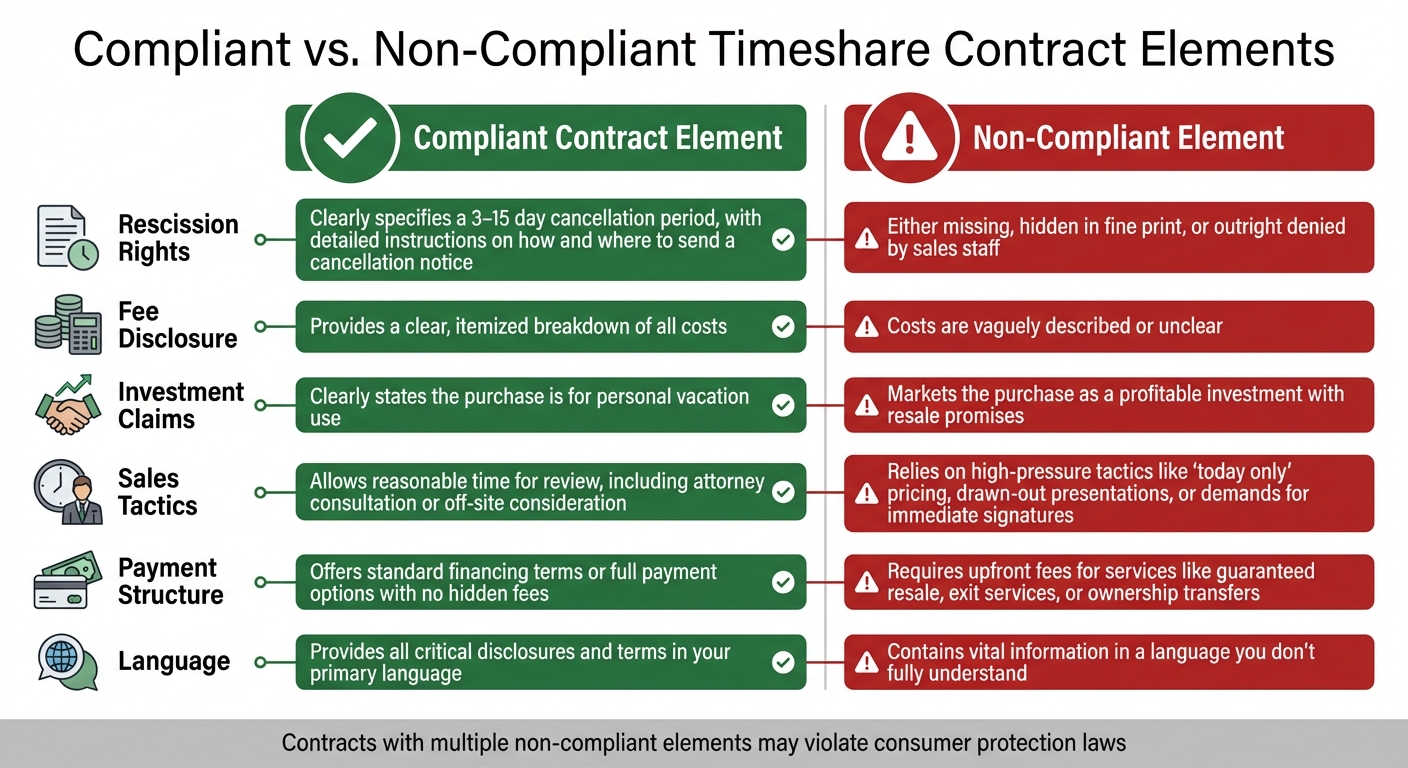
Compliant vs Non-Compliant Timeshare Contract Elements Comparison
Knowing what separates a legally sound contract from one that fails to meet consumer protection standards can save you from financial headaches and drawn-out disputes.
Comparison Table
Here’s a quick look at the key differences between compliant and non-compliant contract elements:
| Feature | Compliant Contract Element | Non-Compliant Element |
|---|---|---|
| Rescission Rights | Clearly specifies a 3–15 day cancellation period, with detailed instructions on how and where to send a cancellation notice | Either missing, hidden in fine print, or outright denied by sales staff |
| Fee Disclosure | Provides a clear, itemized breakdown of all costs | Costs are vaguely described or unclear |
| Investment Claims | Clearly states the purchase is for personal vacation use | Markets the purchase as a profitable investment with resale promises |
| Sales Tactics | Allows reasonable time for review, including attorney consultation or off-site consideration | Relies on high-pressure tactics like "today only" pricing, drawn-out presentations, or demands for immediate signatures |
| Payment Structure | Offers standard financing terms or full payment options with no hidden fees | Requires upfront fees for services like guaranteed resale, exit services, or ownership transfers |
| Language | Provides all critical disclosures and terms in your primary language | Contains vital information in a language you don’t fully understand |
Contracts riddled with red flags like those in the "Non-Compliant Element" column may signal regulatory violations. Use this table as a guide to spot potential issues. A compliant contract ensures transparency and protects your rights. If your agreement includes several non-compliant elements, you might have grounds to cancel it under consumer protection laws.
Conclusion and Next Steps
Key Takeaways
Identifying signs of non-compliance in your timeshare contract is a crucial step in protecting yourself from unnecessary financial burdens and potential fraud. Be on the lookout for missed rescission periods, hidden fees, and high-pressure sales tactics, as these could indicate violations of consumer protection laws. Acting quickly during the rescission period is essential – once that window closes, canceling becomes much more complicated and expensive.
"If you’ve already signed a contract and want to learn about your cancellation rights, you should act quickly. If you get that right, the amount of time you get to cancel is probably quite short, usually three to fifteen days, depending on state law." – Amy Loftsgordon, Attorney
If you notice discrepancies between what was promised verbally and what’s in the written agreement, document everything immediately. Acting sooner rather than later is key – delays could trap you in long-term payments or even lead to foreclosure if you default.
If your contract shows any of these warning signs, seeking legal advice promptly is vital.
Contact Aaronson Law Firm for Assistance
Expert legal guidance can make all the difference when canceling a timeshare. Aaronson Law Firm specializes in timeshare contract rescission, offering free consultations to assess your case and determine whether your agreement violates state or federal laws. Their services include legal demand letters, credit protection, and litigation support to help you escape unwanted timeshare obligations.
Steer clear of firms asking for upfront fees to cancel your timeshare – many are scams that take your money without delivering results. Instead, work with attorneys who understand the precise legal requirements and deadlines necessary for a successful cancellation. Reach out to Aaronson Law Firm today at https://aaronsonlawgroup.com to schedule your free consultation and explore your options for resolving a problematic contract.
FAQs
How do I find my rescission deadline?
To figure out your rescission deadline for a timeshare contract, start by reviewing the terms outlined in your agreement. Typically, contracts include a rescission period that ranges from 5 to 15 days, depending on state regulations. Look for any disclosures or notices provided at the time of signing for the exact timeframe. If you’re having trouble locating this information or need clarification, reaching out to a legal professional familiar with timeshare laws can help you stay within the required deadline.
What fees are commonly hidden in timeshares?
Hidden fees in timeshares can sneak up on you and significantly increase your overall costs. Common charges include annual maintenance fees, mortgage interest, special assessments, exchange fees, property taxes not covered by maintenance, and transaction or banking charges. These expenses can pile up faster than you might expect, so it’s crucial to go through your contract thoroughly and make sure you’re aware of all potential costs.
What should I do if I missed rescission?
If you missed the deadline to cancel your timeshare contract, you might feel stuck, but there are still steps you can take. A qualified timeshare attorney can examine your contract to identify any issues, such as non-compliance or misrepresentation, and guide you on possible next steps. Timing is critical, as some options may hinge on specific details of your case. Reaching out to a legal expert who specializes in timeshare law can help you understand your rights and explore potential solutions.
Related Blog Posts
- 7 Warning Signs of Timeshare Contract Fraud to Watch For
- How To Spot Deceptive Timeshare Offers
- Bait-and-Switch Tactics in Timeshare Sales
- Consumer Rights After Rescission Period Ends