False advertising in timeshare sales is a widespread issue, often involving misleading claims or hidden details that can leave buyers in financial trouble. Here’s what you need to know:
- Key Legal Protections: Federal law, like Section 43(a) of the Lanham Act, prohibits deceptive practices that mislead buyers. Many states also enforce stricter rules, such as mandatory cancellation periods (e.g., 7-10 days in most states) and bans on false guarantees.
- Common Tactics: Sales teams often use high-pressure tactics, false promises of financial returns, hidden fees, and fake urgency ("today only" deals).
- Your Rights: Most states allow you to cancel a timeshare contract within a "cooling-off" period. Even after this, legal options exist if fraud or misrepresentation occurred.
- Taking Action: Report deceptive practices to the FTC, your state attorney general, or the Better Business Bureau. Consulting a timeshare attorney can help you navigate cancellations or legal claims.
Timeshares are designed for vacation use, not as investments. Be cautious, get everything in writing, and act quickly if you suspect deceptive practices.
What Counts as False Advertising in Timeshare Sales?
False advertising in timeshare sales happens when companies mislead potential buyers by making false claims or withholding important details. According to federal law – specifically 15 U.S. Code § 52 – it is illegal for any entity to spread false advertisements intended to persuade someone to purchase services. The law states:
"It shall be unlawful for any person, partnership, or corporation to disseminate, or cause to be disseminated, any false advertisement… for the purpose of inducing, or which is likely to induce, directly or indirectly the purchase of… services."
For a claim to be actionable, it must involve a material misstatement – something likely to influence a buyer’s decision. Exaggerated claims that are clearly opinion-based, also known as puffery, don’t qualify. Issues arise when companies make specific, verifiable claims that turn out to be false or fail to disclose critical details about costs, ownership terms, or resale options. Below are some of the most common deceptive tactics used in the industry.
Common Deceptive Practices Used by Timeshare Marketers
Some timeshare marketers use questionable strategies that may violate the law. A frequent tactic is investment misrepresentation – salespeople often pitch timeshares as "valuable financial assets" that will grow in worth. In reality, their value is tied to vacation use, not financial returns.
Hidden costs are another red flag. Marketers may leave out key expenses like exchange fees, property taxes, or travel costs, giving buyers a skewed picture of the true financial commitment. Maintenance fees, which often rise yearly at rates matching or exceeding inflation, are also commonly downplayed.
Resale and exit scams exploit owners looking to get out of their contracts. Companies might falsely claim the resale market is booming, promise quick sales or big profits, and charge upfront fees. Some exit companies even advise owners to stop paying mortgages or maintenance fees, leading to financial trouble.
Fake urgency tactics are used to pressure buyers into making hasty decisions. Phrases like "this deal is only good today" or "another buyer is interested" are designed to rush decisions, preventing buyers from seeking advice from family, lawyers, or financial advisors. In Arizona, for example, laws limit timeshare presentations to 120 minutes when tied to promised incentives.
Visual deception is another issue, where companies show conceptual images of future amenities without making it clear they aren’t yet built. Additionally, some fail to inform buyers about their right of rescission – a legal cooling-off period that allows them to cancel the contract – or the details of points-based systems, such as how unused points may expire annually.
Here are some key deceptive practices and their legal implications:
| Deceptive Practice | Legal/Regulatory Violation |
|---|---|
| "Today Only" Pressure | Violates consumer "cooling-off" protections and fair trade laws |
| Guaranteed Resale Profit | False material claim |
| Nonexistent Property Photos | Visual misrepresentation / False advertising |
| Hidden Maintenance Hikes | Omission of critical financial details |
| 120+ Minute Presentations | Breaches state-specific time-limit statutes (e.g., Arizona) |
How Federal and State Laws Define False Advertising
Federal law provides the foundation for identifying false advertising. Under Section 43(a) of the Lanham Act, a claim requires proof that false or misleading statements were made in commercial advertising, that these statements caused actual deception (or had the potential to deceive), and that the deception influenced purchasing decisions. The goods or services must also affect interstate commerce, and there must be a likelihood of harm. As noted in Tobinick v. Novella:
"The Lanham Act prescribes liability for false advertising to ‘commercial advertising or promotion.’"
State laws often go further than federal regulations, offering stronger protections. Many states have specific rules for timeshare advertising that exceed general consumer protections. For example, Arizona Revised Statutes § 32-2197.17 prohibits claims in timeshare marketing that suggest timeshares are risk-free or guarantee no losses. The law states:
"Any advertising, communication or sales literature of any kind… shall not contain: Any statement or representation that the timeshare interests are offered without risk or that loss is impossible."
State laws also require marketers to disclose the right of rescission, provide accurate information on maintenance fees and other costs, and avoid making false claims about investment potential or resale prospects. In South Carolina, for instance, victims of deceptive practices under the Unfair Trade Practices Act may recover three times their actual damages plus attorney fees – a strong deterrent against misleading advertising.
The main difference between federal and state enforcement lies in how state laws are tailored to the location of the property. State regulations often include mandatory cooling-off periods, detailed disclosure requirements, and specific bans on deceptive practices common in timeshare sales. These protections form the foundation for consumer rights and cancellation options, which will be discussed in later sections.
Laws That Protect Consumers from False Advertising
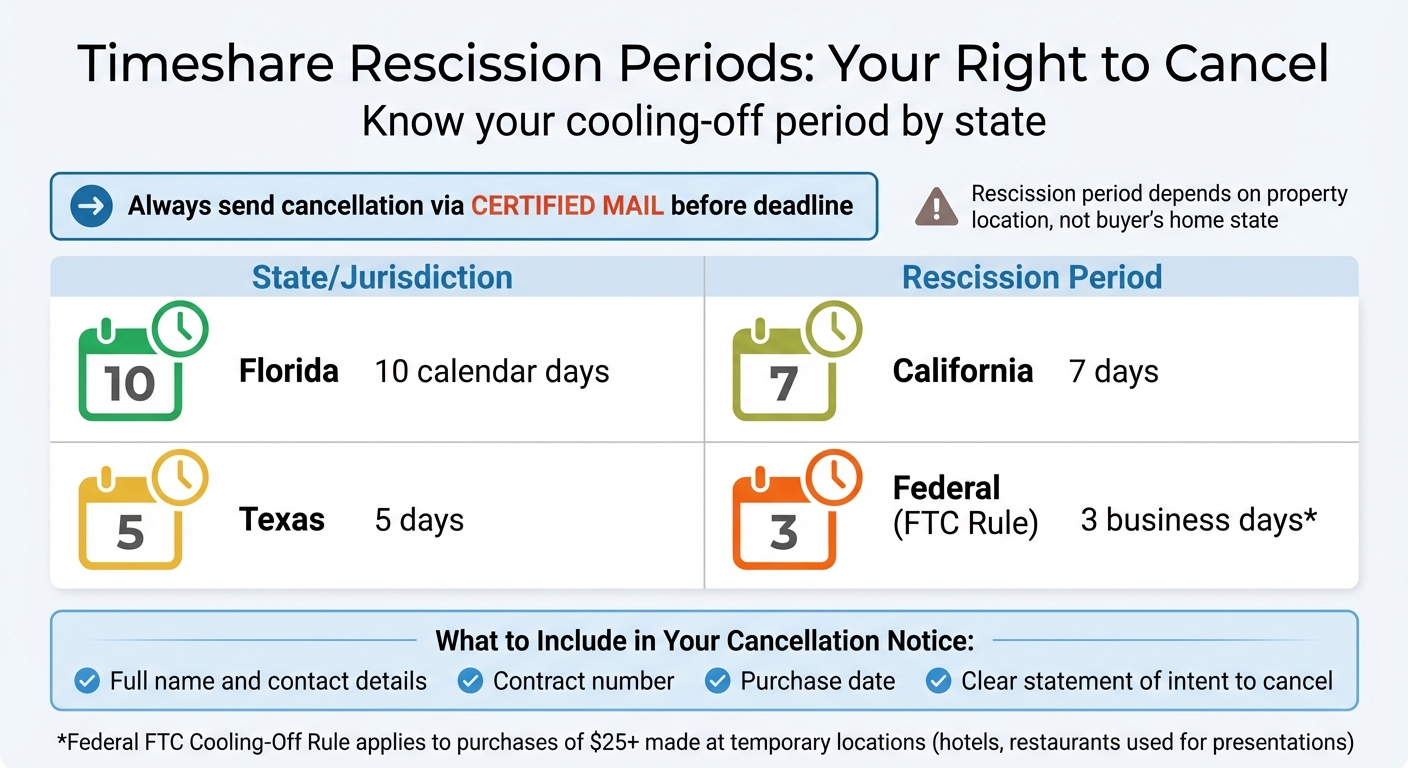
Timeshare Rescission Periods by State and Federal Law
Federal and state laws work together to safeguard timeshare buyers from deceptive practices, offering protections like penalties for fraud and the right to cancel contracts.
Federal Trade Commission (FTC) Rules and Enforcement
At the federal level, the FTC Act plays a key role in combating deceptive timeshare practices. It prohibits "unfair or deceptive acts or practices in or affecting commerce", giving the FTC authority to investigate and penalize companies that mislead consumers. The Telemarketing Sales Rule (TSR) specifically targets phone scams, requiring clear disclosures and banning calls to numbers listed on the National Do Not Call Registry.
The FTC has actively enforced these rules, taking action against fraudulent timeshare operations. For example, a coordinated effort involving the FTC and law enforcement agencies led to 191 actions aimed at stopping timeshare resale scams and travel fraud. In three cases alone, operations allegedly defrauded consumers of over $18 million. One Florida-based scheme defrauded victims – many elderly or financially vulnerable – of more than $14 million. Wifredo A. Ferrer, U.S. Attorney for the Southern District of Florida, commented:
"These victims, many of them elderly or in financial distress, looked to sell their units to help make ends meet or pay other bills. Instead, they were defrauded out of more than $14 million in total. Such fraud will not be tolerated."
Charles A. Harwood, Acting Director of the FTC’s Bureau of Consumer Protection, reinforced this with practical advice:
"Our message to timeshare owners is simple: never pay for a promise, get everything in writing first, and pay only after your unit is sold."
Under federal law (15 USC 54), a first conviction for false advertising with intent to defraud can result in fines and imprisonment, with harsher penalties for repeat offenders.
While federal laws provide broad protections, state laws often add another layer of safeguards tailored to local markets.
State Laws Against Timeshare Misrepresentation
State laws complement federal regulations by imposing additional requirements. Florida, for instance, mandates that timeshare contracts include clear disclosures, such as a 10-day cancellation period and a statement invalidating any attempt to waive cancellation rights. Developers in Florida must refund payments within 20 days of receiving a cancellation notice or within 5 days after a purchaser’s check clears.
Arizona takes a different approach by banning any advertising or verbal claims that misrepresent material facts or suggest timeshare investments are "risk-free." The state also limits unlicensed telemarketers from discussing specific contract details, such as price or financing. Sales presentations in Arizona are capped at 120 minutes for consumers to claim a promised gift, and developers must disclose the odds of winning any contest or drawing.
In many states, developers are required to submit promotional materials for review by a regulatory body upon request. These state-specific rules strengthen federal efforts to shield buyers from misleading marketing. It’s worth noting that the governing laws for a timeshare contract depend on the state where the property is located, not the buyer’s home state, making it crucial to understand local regulations.
Your Right to Cancel: Rescission Periods and Refunds
Rescission periods offer buyers a chance to back out of high-pressure sales agreements. The FTC Cooling-Off Rule allows consumers to cancel certain purchases of $25 or more within 3 business days if the sale occurred at a temporary location, such as a hotel or restaurant used for presentations. State laws often extend these windows:
| State/Jurisdiction | Rescission Period Duration |
|---|---|
| Florida | 10 calendar days |
| California | 7 days |
| Texas | 5 days |
| Federal (FTC Rule) | 3 business days (for temporary locations) |
To cancel within the rescission period, send a formal cancellation notice via certified mail before the deadline. Include your full name, contact details, contract number, purchase date, and a clear statement of your intent to cancel.
Even if the rescission period has passed, buyers may still have options to void a contract under certain conditions, such as fraud (deliberate misrepresentation), duress, or a material breach of contract. These claims require proof that the misrepresentation was significant enough to influence the purchase decision and that the buyer relied on the false information when agreeing to the contract.
How to Identify and Report False Advertising
Warning Signs of Misleading Timeshare Marketing
Spotting deceptive marketing tactics early can save you from a lot of trouble. Timeshare marketers often reel people in with promises of "free" vacation prizes through raffles or sweepstakes. These offers are usually just bait to get you into presentations that gloss over hidden costs and employ pushy sales tactics. Be wary of strategies like "today only" deals, excessively long meetings, and a parade of sales reps designed to prevent you from consulting with family or advisors.
Another common trick involves false resale claims. You might hear promises of a "hot" resale market, eager buyers, or guaranteed profits. But as the Federal Trade Commission (FTC) warns:
"The value of a timeshare is in its use as a vacation destination, not as an investment."
Keep an eye out for hidden financial obligations, like skyrocketing maintenance fees or "free" trips that come with surprise charges.
Exit scams are another risk. Scammers often target timeshare owners with unsolicited calls, offering to cancel contracts in exchange for a large upfront fee. Legitimate agents, on the other hand, only take their fees after a sale is completed. Be cautious of ads that resemble official government notifications or create a false sense of urgency. As the New York State Attorney General emphasizes:
"Advertisements must not appear to be an urgent and official notification to winners in a contest and must not use any other means to convey a false sense of urgency or importance."
Learning to recognize these warning signs is your first line of defense.
Where to File Complaints About False Advertising
If you encounter deceptive practices, report them to help protect others and aid law enforcement. Start by filing a complaint with the Federal Trade Commission (FTC) at ReportFraud.ftc.gov. These reports are added to the Consumer Sentinel database, which is shared with over 2,800 law enforcement partners worldwide. While the FTC notes:
"The FTC does not resolve individual consumer reports… Your reports can help us detect patterns of wrongdoing, and lead to investigations and prosecutions,"
your complaint contributes to larger enforcement efforts.
You should also contact the State Attorney General where the timeshare property is located. State attorneys general have the authority to enforce local consumer protection laws and can take direct action against developers operating in their jurisdiction. Filing a complaint with the Better Business Bureau (BBB) is another option, as they maintain public records of complaints and can mediate disputes between consumers and businesses. Additionally, reach out to local consumer protection agencies in the state where the reseller operates. They can provide insights into ongoing issues or patterns of misconduct.
When to Consult a Timeshare Attorney
If you’re considering signing a timeshare contract – or if you’ve already signed – consulting an attorney is crucial. Cooling-off periods for canceling contracts are typically short, ranging from 3 to 10 days. As TimeshareAttorney.com advises:
"If you’ve already signed, do not delay to contact a timeshare attorney."
Acting quickly can help you take advantage of rescission and consumer protection laws. Even after the rescission period ends, an attorney can determine if your contract was obtained through fraud or contains terms so unfair they might be unenforceable. For example, in states like South Carolina, victims of deceptive practices may recover three times their actual damages plus attorney fees under the Unfair Trade Practices Act. Coastal Law highlights:
"A lawsuit, or even the threat of a lawsuit, can change [the timeshare company’s] mind very quickly"
when it comes to ending an agreement after the rescission period has passed.
Make sure to save all marketing materials and written records, as verbal promises often expose deceptive practices. Several law firms, like Aaronson Law Firm, offer free consultations for timeshare contract cancellation, legal demand letters, credit protection, and litigation support.
sbb-itb-d69ac80
Legal Options for Victims of False Advertising
Suing for Damages Caused by False Claims
If false advertising led you to make a purchase and caused financial harm, you can file a civil claim under Section 43(a) of the Lanham Act. To succeed, you’ll need to prove that the timeshare company made false or misleading statements, that these statements caused actual deception, and that the deception directly influenced your decision to buy.
State laws often provide additional protections. For instance, in South Carolina, victims can pursue claims under the Unfair Trade Practices Act, which allows for recovery of up to three times the actual damages plus attorney fees. On a federal level, intentional false advertising can lead to fines or even imprisonment.
It’s important to note that exaggerated or opinion-based claims – commonly referred to as puffery – are not grounds for legal action. However, deliberate and documented misrepresentations, especially those found in marketing materials or the Public Offering Statement (POS), are actionable. Timeshare attorney Michael Finn clarifies:
"In many states, oral representations made by sales people are not legally binding and, therefore, are not actionable – that means you cannot sue a developer for statements and assertions made by sales people that turn out to be wrong. However, if those statements are deliberately misleading and deceptive, they can be challenged in court."
When multiple people are affected by the same deceptive practice – such as a resort failing to deliver on promised amenities – a class-action lawsuit might be a viable option. This approach allows a group of victims to collectively seek compensation or contract termination.
How Aaronson Law Firm Can Help

Navigating legal actions on your own can feel overwhelming. That’s where Aaronson Law Firm steps in. Specializing in timeshare contract cancellations, the firm assists victims of false advertising and offers a free initial consultation to evaluate your case. This helps determine whether you have grounds to pursue cancellation or financial recovery.
Their services include drafting formal demand letters (Rescission Predicate Correspondence) that outline claims of misrepresentation, unfair business practices, and breach of fiduciary duty. These letters are sent directly to the timeshare company’s legal department and often lead to negotiations for contract termination without requiring a court case.
If litigation becomes necessary, Aaronson Law Firm provides full litigation support, representing clients in civil claims under the Lanham Act or relevant state consumer protection laws. They also offer credit protection services under the Fair Debt Collection Practices Act (FDCPA), shielding clients from aggressive debt collection efforts during the dispute process. In FDCPA cases, victims may recover up to $1,000 per violation, with the collector covering attorney fees.
Legal fees for timeshare cancellations typically range from $4,000 to $15,000, depending on the complexity of the case. A reliable attorney will thoroughly review your contract to ensure you have a strong legal basis before taking on your case.
Conclusion
False advertising in timeshare sales continues to mislead buyers, but knowing your rights can help you stay protected. One of the most important rights you have is the ability to cancel your purchase within your state’s rescission period – without penalty. Be cautious of red flags like "today only" pricing, exaggerated promises of investment returns, or aggressive sales tactics. If you encounter these, you can walk away or report the issue to the Federal Trade Commission (FTC), your state attorney general, or the Better Business Bureau (BBB). Being prepared can help you make informed decisions and act quickly when needed.
Always insist on getting every promise in writing. Verbal commitments made during high-pressure sales pitches often vanish once you sign the contract, leaving you stuck with unexpected financial obligations. Keep in mind, timeshares are meant for vacation enjoyment – not as an investment opportunity.
If deceptive practices have left you financially burdened, seeking legal help may be your best option. The Aaronson Law Firm focuses exclusively on canceling timeshare contracts, even after the rescission period has ended. They offer free consultations, demand letters, full litigation support, and credit protection services under the Fair Debt Collection Practices Act, ensuring you’re shielded from aggressive collection efforts while resolving the dispute.
Licensed attorneys are obligated to prioritize your best interests. If you’re struggling with rising maintenance fees, unmet promises, or regret over a pressured purchase, consulting a timeshare attorney can help you explore your options for cancellation and financial relief.
FAQs
What can I do if I’ve been misled by false advertising in a timeshare sale?
If you believe you’ve been misled by false advertising in a timeshare sale, the first step is to gather all relevant evidence. This includes advertisements, emails, brochures, recordings, and your signed contract. These documents will be key if you decide to file a complaint or take legal action.
Start by reporting the issue to your state attorney general’s office or a local consumer protection agency. These organizations can investigate deceptive practices. Additionally, notify the Federal Trade Commission (FTC), as they oversee laws related to false advertising.
Next, determine if you’re still within your state’s rescission (or cooling-off) period, which typically lasts between 5 and 15 days after signing the contract. If you’re within this timeframe, you can cancel the agreement without any penalties. If the rescission period has already passed, you might need to explore legal options for fraudulent misrepresentation. Consulting a timeshare cancellation attorney, such as Aaronson Law Firm, can guide you through this process, helping you potentially cancel the contract or recover financial losses.
How can I spot and protect myself from deceptive practices in timeshare sales?
To spot deceptive practices, keep an eye out for bait-and-switch tactics, pushy sales pitches, and deals that seem way too good to be true. Offers like "free vacations" or "low-cost ownership" often come with hidden fees, limited availability, or tricky terms. Sales presentations that are supposed to be short can drag on for hours, and verbal promises may mysteriously disappear from the written contract.
To safeguard yourself, make sure all claims are backed up in writing before agreeing to anything. Take the time to carefully review the contract for hidden fees, unclear terms, or overblown promises. Most states offer a cooling-off period – usually 7 to 10 days – giving you a chance to rethink your decision. Keep detailed records during the sales process, including notes, receipts, and any correspondence. It’s also a good idea to monitor your credit for unauthorized charges. If you feel you’ve been deceived, reaching out to a timeshare attorney can help you understand your options and work toward canceling any unfair agreements.
What can I do to cancel a timeshare contract after the rescission period ends?
Even if the rescission period (usually between 3 and 15 days, depending on your state) has passed, you might still have options to cancel your timeshare contract. Situations like misrepresentation by the developer, failure to meet contract disclosure requirements, or financial hardship could give you grounds to terminate the agreement.
Start by gathering all your documentation, including the contract, payment records, and any proof of misleading advertising or undisclosed fees. Then, draft a written cancellation request explaining your concerns in detail and send it via certified U.S. Mail to ensure there’s a record of delivery. While you can handle this process yourself, working with a licensed attorney who specializes in timeshare law can often improve your chances. An attorney can assist with drafting demand letters, safeguarding your credit, and representing you in court if it comes to that.
Time is of the essence, as delays can make it harder to dispute the contract. Firms like Aaronson Law Firm, which handles timeshare cases exclusively, can help you navigate the process and assert your cancellation rights effectively.
Related Blog Posts
- Bait-and-Switch Marketing: Consumer Rights Explained
- How To Spot Deceptive Timeshare Offers
- How Courts Handle Deceptive Timeshare Sales
- Bait-and-Switch Tactics in Timeshare Sales