
Understanding your refund rights when canceling a timeshare is critical to avoid unnecessary financial stress. Here’s what you need to know:
- Rescission Period: U.S. law grants a cooling-off period (3 to 15 days, depending on the state) to cancel a timeshare contract and receive a full refund.
- State-Specific Rules: The timeline and rules vary by state. For example, Florida offers 10 calendar days, while Massachusetts allows 3 business days.
- Written Notice: Cancellation must be communicated in writing, including key details like your name, property description, and purchase date. Use certified mail for proof.
- Post-Rescission Options: If the rescission period has passed, refunds may still be possible in cases of contract breaches or misrepresentation.
- Protecting Credit: Ensure all cancellations are confirmed in writing to avoid credit issues.
Act quickly, follow state-specific guidelines, and keep thorough documentation to safeguard your rights.
Understanding the Rescission Period for Timeshare Cancellations
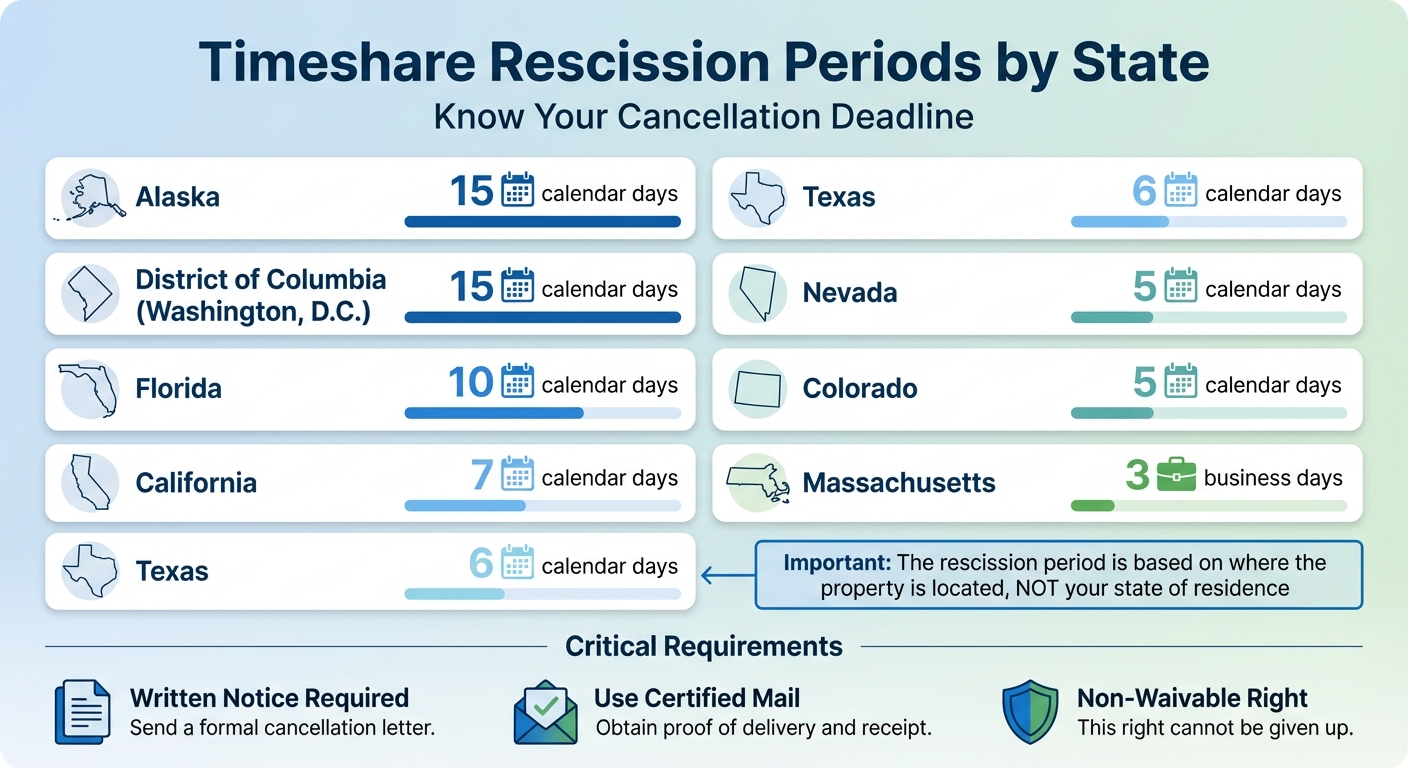
Timeshare Rescission Period by State: Cancellation Deadlines and Requirements
What Is the Rescission Period?
The rescission period is your legal safety net – a short window, typically lasting between 3 and 15 days, where you can cancel your timeshare contract and get a full refund without penalties. Lawmakers designed this protection to shield buyers from the consequences of high-pressure sales tactics that often lead to regret.
This right is non-negotiable. A developer cannot legally ask you to waive it, even if such language appears in the contract. The length of the rescission period depends on where the property is located or where the contract was signed – not your state of residence.
To make the most of this protection, it’s crucial to follow the rules carefully.
Legal Requirements for Rescission
Canceling your timeshare requires written notice – a phone call or verbal notice won’t cut it. Your written notice should include these key details:
- Current date
- Your name and address
- Description of the timeshare
- Purchase date
- A clear statement of your intention to rescind the contract
You’ll also need to follow the delivery instructions outlined in your contract. Some developers insist on certified or registered mail to confirm receipt. Using USPS Certified Mail with a return receipt is a smart move – it provides timestamped proof of delivery, which can protect you if the developer disputes your claim or says you missed the deadline.
"State law also often requires that information about the right to cancel be included in the contract. The right to cancel is typically nonwaivable, meaning the seller can’t ask or require you to give up this right." – Amy Loftsgordon, Attorney, Nolo
With your cancellation notice prepared, understanding the specific deadlines in your state is the next step.
Key Deadlines to Know
Knowing your rescission deadline is critical. Some states count calendar days (weekends included), while others only count business days. For instance:
- In Colorado, you have 5 calendar days starting from the day you sign the contract – not when you get back from vacation.
- Massachusetts allows 3 business days.
- Alaska and Washington, D.C. offer a more generous 15 calendar days.
Additionally, the clock might not start ticking until you’ve received all necessary disclosure documents, like the Public Offering Statement. If these materials are delayed, your rescission window could extend. However, don’t wait – mailing delays can jeopardize your refund.
Here’s a quick breakdown of rescission timelines in different states:
| State | Rescission Timeline | Day-Count Basis |
|---|---|---|
| Florida | 10 days | Calendar days |
| California | 7 days | Calendar days |
| Texas | 6 days | Calendar days |
| Nevada | 5 days | Calendar days |
| Colorado | 5 days | Calendar days |
| Massachusetts | 3 days | Business days |
| Alaska | 15 days | Calendar days |
| District of Columbia | 15 days | Calendar days |
Precise tracking of these deadlines is your best chance at securing your refund.
sbb-itb-d69ac80
Steps to Claim a Refund After Timeshare Cancellation
Required Documentation for Refund Claims
To successfully claim a refund after canceling a timeshare, you’ll need to gather some essential documents. Start with your original contract – this will guide you through the specific rescission instructions and confirm the purchase date. You’ll also need proof of payment, such as credit card statements, wire transfer confirmations, or cashier’s check receipts.
The most important piece is your cancellation letter. This letter must include your name (as it appears in the contract), your contact details, the name of the timeshare company, a detailed description of the property, the purchase date, and a clear statement of cancellation. For instance, a simple phrase like, "I am contacting you within the rescission period to cancel this timeshare contract", is often sufficient, according to attorney Amy Loftsgordon.
In some states, like Arkansas, it’s also vital to note the date you received the public offering statement, as this can influence your cancellation window.
How to Submit a Refund Request
Once your cancellation letter is ready, send it using certified or registered mail as specified in your contract. Make sure to address it to the department or individual outlined in the rescission section of the contract – don’t send it to general customer service.
Mail your notice well before the deadline, keeping potential postal delays in mind. Use a delivery method that provides a verifiable paper trail. Retain copies of everything you send, and securely store your return receipt. A certified mail receipt with a return receipt card showing when the company received your notice can be critical if they later claim you missed the deadline. This evidence can be key if the company disputes your claim or delays your refund.
If these steps don’t result in a refund, you’ll need to escalate the situation.
What to Do If Refunds Are Delayed or Denied
Act quickly if your refund doesn’t arrive within a few weeks. Start by contacting the resort directly and asking for the department that handles deed-backs or contract surrenders. As Brian Rogers, Founder of Timeshare Users Group, says, "the squeaky wheel gets the grease."
If the issue remains unresolved, file complaints with the FTC, CFPB, and your state’s Attorney General. Prepare a comprehensive evidence packet, including your signed contract, proof of mailing, and all correspondence with the company. These agencies can often apply pressure on developers to process valid cancellations.
Additionally, check your contract for an arbitration clause. This clause may outline specific steps or notices required before you can escalate further. For persistent issues or complex disputes, consulting with a firm like Aaronson Law Firm can help you navigate the legal process and enforce your rights to secure your refund.
Refund Options After the Rescission Period
Even if the rescission period has passed, there are still legal avenues to explore for a refund. While the standard window for rescission is limited, certain circumstances may allow you to extend your rights and seek remedies.
Grounds for Post-Rescission Refunds
Missing the rescission deadline doesn’t mean you’re out of options. One of the strongest cases for a refund involves inaccurate public offering statements. For instance, in Arkansas, buyers may file for rescission within four years if the public offering statement contains errors or if the contract’s validity is in question. Attorney Amy Loftsgordon explains:
"The purchaser may bring a lawsuit in court within four years to rescind the contract if there is a question about the accuracy of the public offering statement or validity of the timeshare contract."
Another potential reason for seeking a refund is a breach of contract by the developer. If the company fails to deliver on the promises outlined in the agreement, you may have a valid claim. However, verbal assurances that aren’t backed by written documentation won’t hold up in court. Lisa Ann Schreier, also known as The Timeshare Crusader, notes:
"No developer or lender is going to cancel a contract just because you suddenly decided you don’t want the timeshare or can’t afford it. Also, claiming, without written proof, that you were promised your maintenance fees would never go up… are not legitimate reasons either."
The critical factor here is having documented evidence. Carefully review your official paperwork and compare it with any promises made to identify possible misrepresentation.
If pursuing legal claims for a refund doesn’t succeed, there are still alternative ways to exit your timeshare agreement.
Alternative Solutions to Timeshare Refunds
If a full refund isn’t an option, consider deedback programs as a potential exit strategy. These programs allow you to voluntarily surrender your timeshare ownership back to the resort. However, they often require that your account be in good standing – meaning all maintenance fees are paid, and there’s no remaining mortgage balance. To explore this option, contact your developer directly or visit ResponsibleExit.com.
If you suspect you have legal grounds for post-rescission cancellation, consulting an attorney is essential. Schreier emphasizes:
"Hiring a reputable attorney will help you to not only determine if you have a valid legal claim against your developer but also give you legal counsel at all stages of your case."
Some law firms, like Aaronson Law Firm, even offer free consultations to evaluate your case. They can help determine if issues like contract invalidity or disclosure errors apply to your situation. Be cautious of timeshare exit companies demanding large upfront fees, as many of these are scams that take your money without resolving your contract. An attorney can guide you on whether legal action is viable or if a deedback program is your best course of action.
Protecting Your Financial and Legal Rights
This step ensures your legal rights remain intact after cancellation, helping you secure both your refund and credit standing.
Ensuring Refunds Are Properly Processed
Once your cancellation is confirmed, it’s time to focus on protecting your financial interests. Keep copies of all communications, including your cancellation notice and tracking receipts. These documents create a clear paper trail. Always include critical details like your account number, purchase date, and property specifics in every communication to help the developer locate your file quickly and avoid claims of "lost paperwork." After cancellation, request written confirmation that your account has a zero balance – this proof is essential to guard against unexpected charges down the line.
If your refund is delayed or denied, you can file complaints with the Federal Trade Commission (FTC) at ReportFraud.ftc.gov or the Consumer Financial Protection Bureau (CFPB). For example, the FTC has previously acted against companies charging excessive fees for incomplete timeshare exit services. Filing a complaint with these agencies not only creates an official record but may also prompt investigations that push companies to honor valid refund requests.
Equally important is understanding how missteps in the cancellation process can affect your credit.
How Improper Cancellation Can Impact Credit
Avoid stopping payments until you receive written confirmation that your contract has been legally canceled. If you halt payments prematurely, the timeshare association could report you to collections or even initiate foreclosure proceedings, which could severely harm your credit score.
As discussed earlier, most state laws ensure that the right to cancel is nonwaivable. If a timeshare company reports a default to credit bureaus after you’ve legally canceled, federal law allows you to dispute these negative marks. Be prepared to provide certified mail receipts and the developer’s confirmation letter as evidence when disputing any inaccuracies. For complicated cases or disputes involving large sums, consulting with Aaronson Law Firm can offer guidance on protecting your credit while pursuing your refund.
Conclusion
Understanding your refund rights can save you from years of escalating costs. The rescission period – which typically lasts between 3 and 15 days depending on your state – is your clearest opportunity to secure a full refund. Missing this deadline, even by a single day, could mean losing your cancellation rights and facing complicated legal battles. This underscores the importance of the steps mentioned earlier.
Remember, rescission rights are time-sensitive, so it’s crucial not to rely on assumptions.
Here’s what you need to do: act quickly if you’re still within the rescission window, use certified mail or another trackable delivery method, and keep copies of all correspondence. Meticulous documentation is essential. If your rescission period has already expired, avoid companies demanding hefty upfront fees. Instead, gather evidence of any misrepresentations and consider reaching out to Aaronson Law Firm to explore whether you have valid grounds for a post-rescission cancellation.
Whether you’re within the rescission window or past it, knowing your rights and seeking proper legal advice can protect both your finances and your credit. Follow the outlined steps to navigate the process confidently.
FAQs
When does my rescission period start and end?
The cancellation period for a timeshare contract generally starts the day you sign the agreement. This window usually spans 3 to 7 days, depending on the laws in your state, with many states providing a 5-day timeframe for cancellation. Be sure to review your contract or check your state’s regulations to confirm the exact period.
What if the timeshare company says they never received my cancellation letter?
If the timeshare company says they didn’t receive your cancellation letter, make sure to send it via certified mail with proof of delivery. This way, you’ll have evidence that it was sent within the required rescission period. Also, don’t forget to keep a copy of the letter and the delivery confirmation for your own records.
Can I still get a refund after the rescission period ends?
No, you usually can’t get a refund once the rescission period has passed. In most states, including Florida, there’s a short cooling-off period – typically between 3 to 10 days – during which you can cancel a timeshare contract. If you don’t act within this window, you’ll likely forfeit your chance for a refund. It’s crucial to act quickly during this timeframe to secure your refund rights.
Related Blog Posts
- What to Include in a Rescission Letter to Developers
- Rescission Period vs. Cancellation Rights
- Timeshare Rescission Laws: Developer Compliance
- Timeshare Cancellation Deadlines by State