
Timeshares often come with high upfront costs, ongoing fees, and restrictions that limit your travel flexibility. Luckily, there are better, more flexible, and cost-effective alternatives. Here are seven options that can save you money while offering more freedom:
- Vacation Rentals (Airbnb, Vrbo): No upfront costs, flexible booking, and lower long-term expenses compared to timeshares.
- Hotels with Loyalty Programs: Free to join, earn points for stays, and enjoy added perks like free nights and upgrades.
- House Swapping Networks: Affordable annual fees and the ability to stay in homes worldwide without direct exchanges.
- Camping and Glamping: Pay only when you travel, with options ranging from basic campsites to luxury tents.
- Budget All-Inclusive Resorts: One upfront price covers lodging, meals, and activities, without ongoing commitments.
- Travel Membership Clubs: Gain discounts on travel services with no property-related obligations.
- Staycations and Local Rentals: Save on travel costs by exploring destinations close to home with flexible, pay-as-you-go options.
Quick Comparison
Here’s how these options stack up against timeshares in terms of cost and flexibility:
| Vacation Option | Upfront Cost | Annual Fees | Flexibility | Example Cost (1 Week) |
|---|---|---|---|---|
| Timeshares | $24,000+ | $1,000+ | Low | $2,500+ |
| Vacation Rentals | $0 | $0 | High | $1,050 |
| Hotels (Loyalty Points) | $0 | $0 | High | $1,750 |
| House Swapping | $100–$235 | $100–$235 | High | $200 |
| Camping/Glamping | $0 | $0 | High | $500 |
| All-Inclusive Resorts | $0 | $0 | High | $770–$1,800 |
| Staycations | $0 | $0 | High | $1,000–$1,500 |
Timeshares often cost over $36,000 in 10 years, while these alternatives can save you tens of thousands without locking you into rigid contracts.
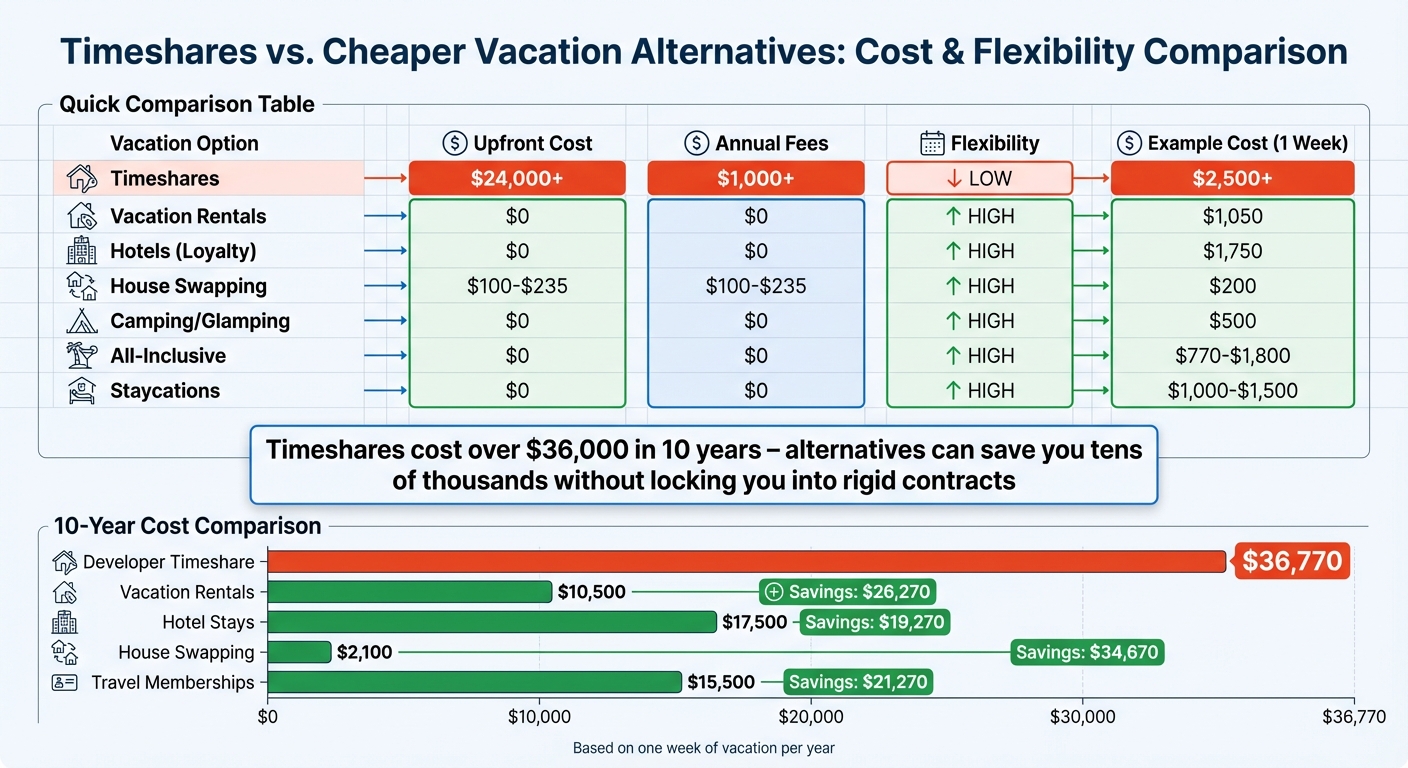
Timeshares vs Alternative Vacation Options: 10-Year Cost Comparison
1. Vacation Rentals via Airbnb or Vrbo
Cost Savings Compared to Timeshares
Vacation rental platforms like Airbnb and Vrbo are a budget-friendly alternative to timeshares. Timeshares demand a hefty upfront payment – around $24,000 – plus annual maintenance fees that exceed $1,000 and keep climbing, whether you use the property or not. In contrast, vacation rentals require no initial investment and come without recurring fees. Over a 20-year span, the average cost of rental bookings is about $19,000, which is less than half the cost of owning a timeshare.
Shared rentals can make trips even more affordable. For instance, a three-bedroom condo in Kissimmee might cost around $35 per person per night, making group trips economical. Plus, rental platforms offer flexibility that timeshares simply can’t match.
Flexibility in Booking and Usage
Timeshares tie you to specific weeks and locations, but vacation rentals give you complete freedom to choose your travel dates and destination. Whether you need a cozy studio for a solo getaway or a sprawling mansion for a family reunion, you can pick the perfect property without additional fees or restrictions.
"Timeshare owners have to pay every year no matter what their circumstances", says Suzanne Stojanovic, Spokesperson for American Consumer Claims.
With platforms like Vrbo offering over 2 million listings globally and Marriott Homes & Villas featuring 140,000 options, the variety is unmatched. You’re free to explore new destinations every year – no complicated point systems or exchange fees involved.
Avoidance of Long-Term Financial Commitments
Vacation rentals also eliminate the stress of long-term contracts. With a pay-as-you-go model, there’s no need to worry about depreciation or legal hassles tied to ownership. If your travel plans change, you simply stop booking – no lawyers or exit strategies required.
Cancellation policies also cater to unpredictable plans. Airbnb’s "Flexible" option allows for a full refund up to 24 hours before check-in, while Vrbo’s "Relaxed" policy offers a 100% refund if canceled at least 14 days in advance. This flexibility ensures you’re never locked into a trip you can’t take.
sbb-itb-d69ac80
2. Hotels with Loyalty Programs
Cost Savings Compared to Timeshares
Hotel loyalty programs offer a smart alternative to the hefty costs associated with timeshares. Unlike timeshares that require a significant upfront payment and ongoing fees, most loyalty programs are free to join. Plus, you can earn points through everyday spending on groceries, gas, and bills using a credit card, eliminating the need for a large initial investment.
These programs provide excellent redemption options. For instance, World of Hyatt allows redemptions ranging from 3,500 to 30,000 points per night based on the property category, while Marriott Bonvoy typically requires 10,000 to 50,000 points for standard hotels. With strategic planning, you can maximize your points – like booking a luxurious Park Hyatt suite worth $1,200 per night for just 30,000 points. Additionally, programs such as IHG One Rewards offer exclusive member discounts of 3–10% off standard rates.
Elite status in these programs brings even more perks, including complimentary breakfast, room upgrades, and features like Hilton’s "Fifth Night Free", which can significantly reduce travel expenses. These benefits make it easier to plan vacations without the financial and scheduling constraints of timeshares.
Flexibility in Booking and Usage
On top of cost savings, hotel loyalty programs provide unparalleled flexibility. With Marriott Bonvoy covering nearly 9,000 properties and Hilton Honors spanning around 7,000 hotels, you have the freedom to book any available room at participating locations. There are no fixed vacation weeks, exchange fees, or mandatory sales presentations to deal with.
Unlike timeshares, which tie you to specific weeks or locations – even if you can’t use them – hotel loyalty programs let you decide when and where to travel. Points often roll over, and there are no penalties for letting your account go inactive. This flexibility ensures you’re never locked into a rigid schedule or forced into legal hassles to make changes.
Additional Perks or Unique Experiences
Elite membership in these programs unlocks even more value, giving you access to exclusive privileges. Your points can be used for stays at ultra-luxury properties like Six Senses, Raffles, Park Hyatt, and St. Regis, offering premium experiences without the long-term commitment of a timeshare. Programs like IHG One Rewards also introduce "Milestone Rewards", which include suite upgrades and annual lounge memberships, rewarding travelers sooner than traditional timeshare systems.
"Nowadays timeshare membership is not only less flexible, it is more expensive and not exclusive. There no longer exists a convincing reason to pay extra for something they can get cheaper on the internet", says Jayne Niven, Timeshare Contracts and Compensation Expert.
A 20-year comparison highlights the cost difference: hotel bookings average $19,700, while timeshares cost over $43,000. That’s less than half the expense, with the added benefit of exploring new destinations on every trip. These savings, combined with the freedom and flexibility of loyalty programs, make them a far better option than committing to a timeshare.
3. House Swapping Networks
Cost Savings Compared to Timeshares
House swapping networks are an affordable alternative to timeshares, with annual fees ranging from $40 to $235. Compare that to the hefty upfront costs and recurring fees tied to timeshares, and the savings are clear. Some platforms, such as Switch, even allow free exchanges.
"The $235 annual fee for the service is about the price of one night in a hotel room – yet you can literally travel the world all year long." – Fodor’s
For example, HomeExchange charges $150–$235 annually for unlimited swaps, while HomeLink offers memberships for $140 per year. Both platforms provide an extra year free if you don’t find a swap in your first year. Even the higher-priced Love Home Swap at $276 annually includes perks like airport lounge access and 500 free points. This affordability, paired with flexibility, makes house swapping a standout option compared to traditional timeshares.
Flexibility in Booking and Usage
Beyond cost savings, house swapping offers unmatched booking freedom. Unlike timeshares, which tie you to specific weeks and locations, house swapping allows you to travel when and where you want. Many platforms use point-based systems, like GuestPoints, letting you stay at homes without needing a direct, simultaneous exchange. This eliminates the hassle of syncing schedules with another traveler.
Memberships are also hassle-free – cancel anytime without being locked into long-term contracts or payments. Networks like Intervac, with 6,000 listings mostly in Europe, and HomeForSwap, which has global coverage, give you access to a variety of properties, from city apartments to country farmhouses, all for a single annual fee.
Additional Perks or Unique Experiences
House swapping provides a residential travel experience that timeshares simply can’t match. You’ll stay in fully equipped homes with kitchens, laundry facilities, and unique extras like bicycles, surfboards, or even car exchanges. Many platforms also include insurance coverage for property damage, saving you from purchasing separate rental insurance.
"It’s a way to use the equity in your home for travel." – Paige French, HomeExchange Member
Planning your swap up to a year in advance not only gives you the best choices but also helps you build a strong reputation within the swapping community.
4. Camping and Glamping Sites
Cost Savings Compared to Timeshares
Camping and glamping offer a refreshing alternative to the ongoing expenses of timeshare ownership. Instead of being tied to year-round financial commitments, you only pay for these experiences when you actually travel. For instance, basic camping rentals often provide optional supply kits for around $30 per group of four. Glamping options cater to a range of preferences – from simple off-grid tipis without electricity to high-end tents featuring Casper King beds and air conditioning – all without any long-term obligations.
Many glamping hosts also make pricing straightforward by highlighting "no cleaning fees" upfront, which helps keep costs manageable. This pay-as-you-go approach gives you more control over your budget, making it a flexible option compared to other vacation choices.
Flexibility in Booking and Usage
Another advantage is the freedom to book on your own terms. Platforms like Airbnb allow for spontaneous travel and the ability to pick a new destination each time. Unlike timeshares, which often tie you to specific resorts or complicated exchange systems, camping and glamping let you decide where and when you want to go.
Additional Perks and Unique Experiences
Glamping sites often receive glowing reviews on Airbnb, with guests praising the opportunity to "unplug" and "reconnect with nature" while still enjoying modern comforts like WiFi and heated beds. Many locations also include special touches like private hot tubs, saunas, and fire pits, elevating the outdoor experience. These stays provide a more personal and nature-focused escape compared to the tourist-heavy atmosphere of typical timeshare resorts.
5. Budget All-Inclusive Resorts
If you’re looking for a vacation option that combines affordability with convenience, budget all-inclusive resorts are worth considering. They offer a straightforward way to enjoy a getaway without the recurring fees or restrictions of timeshares.
Cost Savings Compared to Timeshares
One of the biggest draws of budget all-inclusive resorts is the upfront pricing. This single fee covers accommodations, meals, drinks, and often extras like activities or airport transfers. For instance, a 7-night stay for two might cost just $770 – less than many annual timeshare maintenance fees. In destinations like the Dominican Republic, you can find options starting at $110 per night, while mid-range resorts in Mexico average around $220 per night. These packages often include perks like snorkeling, yoga classes, and Wi-Fi, which might otherwise add up quickly.
When you compare total costs, the savings are clear. A week-long all-inclusive stay for two might cost $1,800, while booking everything separately could run you $2,900. Families also benefit – an all-inclusive five-day trip for four might total $1,100, compared to $1,200–$2,000 when paying for food and drinks separately.
Flexibility in Booking and Usage
Unlike timeshares, which tie you to specific weeks or locations, all-inclusive resorts give you the freedom to choose when and how long to stay. Whether you want a quick 3-day escape or a 10-day adventure, the choice is yours. Booking 3–6 months in advance often yields the best rates, and traveling mid-week (Sunday through Thursday) can unlock even lower prices. Traveling during off-peak months, like January or September, can also save you a lot – rooms that cost $310 in March might drop to $180 in September. This flexibility makes all-inclusive resorts a more adaptable option compared to the rigid scheduling of timeshares.
Avoidance of Long-Term Financial Commitments
All-inclusive resorts operate on a simple, pay-as-you-go system. This eliminates the long-term financial commitments associated with timeshares, such as annual maintenance fees or special assessments for repairs. You also avoid the risk of owning an asset that could lose up to 70% of its value over time. As the Federal Trade Commission explains:
The value of a timeshare is in its use as a vacation destination, not as an investment.
By booking an all-inclusive resort, you’re paying solely for your vacation, without inheriting a financial responsibility that could even be passed on to your heirs.
Additional Perks and Unique Experiences
These resorts also offer a stress-free vacation experience. With everything prepaid, you can relax without worrying about daily budgets or surprise expenses. Even budget-friendly options often include multiple dining choices, pool access, and basic activities. While luxury resorts ($480/night) might add perks like gourmet dining or butler service, budget resorts still deliver plenty of value. Just check gratuity policies – many budget resorts exclude tips, so plan for an extra $5–$10 per person per day.
Perhaps the most appealing feature is the freedom to explore new destinations every year. Unlike timeshares, which tie you to one property, all-inclusive resorts let you experience something different with each trip. It’s a hassle-free way to vacation without the strings attached.
6. Travel Membership Clubs
Travel membership clubs are all about giving you access to travel perks without the hassle of ownership. By joining, you gain discounts on hotels, flights, car rentals, and more – without the long-term commitment of a timeshare. This setup lets you plan vacations on your own terms, free from the financial strings attached to property ownership.
Cost Savings Compared to Timeshares
Timeshares come with a hefty price tag, averaging $22,180 upfront. In comparison, travel club memberships typically cost between $2,500 and $20,000 annually, with some requiring an initial fee ranging from $5,000 to $30,000. Even at the higher end, this is still far less than owning a timeshare when you factor in decades of maintenance fees and special assessments. Instead of sinking money into property ownership, you’re investing directly in your travel experiences.
Flexibility in Booking and Usage
Most travel clubs use points-based systems that let you tailor your trips to suit your preferences. Unlike timeshares, which tie you to specific weeks at a single resort, these memberships allow you to explore multiple destinations. Imagine a beach getaway in Florida one year and a cozy mountain retreat in Colorado the next. However, some clubs may have blackout dates during peak seasons or additional fees, but the overall flexibility still outshines traditional timeshare options.
Avoidance of Long-Term Financial Commitments
One of the biggest advantages of travel clubs is the freedom from property-related obligations. Bay Street Capital Holdings puts it best:
As a member, you are not obligated to take care of the property… the major maintenance of the property will be handled by the respective owner(s).
You won’t have to worry about property taxes, upkeep, or unexpected repair bills. There are no perpetual contracts or deeded responsibilities that could burden your heirs. If the membership no longer suits your needs, leaving is much simpler than dealing with the complexities of selling or canceling a timeshare. You’re paying for a service, not signing up for a lifetime of financial responsibility.
Additional Perks and Unique Experiences
Travel clubs often go beyond just discounts, offering concierge services, trip planning assistance, exclusive tours, and access to special events. These extras help you craft personalized vacations with ease. Whether it’s insider tips, unique experiences, or professional planning, these perks elevate your trips in ways that standard timeshare stays simply can’t match. It’s a flexible, service-focused alternative that keeps you in control of your travel plans.
Next, explore even more flexible and affordable vacation options that bring the fun closer to home.
7. Staycations and Local Rentals
Sometimes, the perfect vacation is closer than you think. Staycations and local rentals let you enjoy a refreshing getaway without the hefty costs or long-term obligations of a timeshare. By focusing on destinations within 100 miles of home, you can skip pricey airfare while still indulging in the relaxation you deserve. This approach aligns with the growing demand for flexible, pay-as-you-go vacation options.
Cost Savings Compared to Timeshares
The numbers speak for themselves. Timeshares often come with a hefty $20,000+ upfront price tag and annual fees of $1,000–$2,000. In contrast, local rentals typically cost just $100–$200 per night, saving you 50–70% for short trips. For example, a week-long stay at an Airbnb or Vrbo property might set you back $1,000–$1,500, compared to a timeshare’s effective cost of $2,500+ when factoring in purchase costs, maintenance fees, and travel expenses. With local rentals, you’re only paying for what you use – no contracts, no ongoing fees. It’s a simple way to cut costs while keeping your travel plans flexible.
Flexibility in Booking and Usage
Say goodbye to rigid schedules and complicated exchange systems. Modern booking platforms allow you to confirm stays instantly for any date, giving you ultimate control. Need a spontaneous weekend escape? Done. Want to extend your trip? Easy. You can choose from options like city apartments, lakeside cabins, or even glamping sites such as Huttopia in the Berkshires, Massachusetts, where tents start at $150 per night and include access to trails and pools. Look for properties within 100 miles and book midweek to score 20–30% discounts. With flexible cancellation policies, these rentals offer the freedom to vacation on your terms.
Avoidance of Long-Term Financial Commitments
One of the biggest advantages of local rentals is the lack of long-term financial obligations. Timeshare owners are tied to annual fees, even if they don’t use their allocated week. With local rentals, you simply pay for your stay – no contracts, no strings attached. If your plans change or your budget tightens, you can skip booking altogether without worrying about resale hassles or legal complications.
Additional Perks and Unique Experiences
Local rentals go beyond affordability and flexibility – they often provide comforts that hotels and timeshares can’t match. Think full kitchens, laundry facilities, and extra space for families. Cooking your own meals can stretch your budget even further, and you’ll have the chance to discover hidden local gems, like nearby beaches or attractions you may have overlooked. Properties like Prospect Berkshires offer cabins starting at $200 per night, complete with wellness-focused amenities. Plus, by choosing these rentals, you’re supporting local property owners and enjoying personalized service that adds a special touch to your trip – all without the sales pitches that come with timeshares.
Cost Comparison: Timeshares vs. Alternatives
The cost difference between timeshares and other vacation options becomes clear when you break down the numbers over time. A developer timeshare typically costs $24,170 upfront, with annual maintenance fees of $1,260 in 2024. Over five years, that adds up to $30,470, and over ten years, it jumps to $36,770 – and that’s assuming maintenance fees don’t increase, which they often do.
In contrast, alternative vacation options are far more budget-friendly. Vacation rentals, for instance, have no upfront costs. At about $150 per night, a one-week stay costs roughly $1,050, or $10,500 over ten years. Hotel loyalty programs also avoid upfront fees, and house-swapping platforms charge only modest membership fees. The result? Substantial long-term savings compared to timeshares.
Here’s a quick breakdown of the costs:
| Vacation Option | Initial Cost | 5-Year Total Cost | 10-Year Total Cost | Savings vs. Timeshare (10 Years) |
|---|---|---|---|---|
| Developer Timeshare | $24,170 | $30,470 | $36,770 | $0 |
| Vacation Rentals | $0 | $5,250 | $10,500 | $26,270 |
| Hotel Stays | $0 | $8,750 | $17,500 | $19,270 |
| House Swapping | $100 | $1,100 | $2,100 | $34,670 |
| Travel Memberships | $500 | $8,000 | $15,500 | $21,270 |
- Vacation rentals assume one week per year at $150/night.
- Hotel stays estimate seven nights annually at $250/night.
- House swapping includes platform fees of approximately $200/year.
- Travel memberships factor in an initial fee and $1,500 annual dues.
The numbers make it clear: flexible, pay-as-you-go vacation options can save you tens of thousands of dollars over a decade. And there’s another financial downside to timeshares – resale value. According to Brian Rogers, owner of Timeshare Users Group:
"On the resale market, the typical timeshare sells for 10% or less of what the original owner paid."
In other words, that $24,170 investment might only fetch $2,400 or less if you decide to sell. Alternatives like vacation rentals or house-swapping don’t carry this kind of financial risk.
If you’re stuck in a timeshare contract and want to explore your legal options, Aaronson Law Firm specializes in helping clients cancel their agreements and avoid ongoing costs. They even offer free consultations to help you figure out the best course of action. Visit Aaronson Law Firm for more information.
Conclusion
This article highlighted how timeshares stack up against more flexible and budget-friendly vacation options. These alternatives let you skip the recurring maintenance fees and long-term commitments, giving you the freedom to pay only for the nights you stay while exploring new destinations each year. The flexibility and cost savings make these options a clear choice over the limitations of timeshares.
If you’re feeling stuck with a timeshare and the financial stress it brings, Aaronson Law Firm provides free consultations to help you cancel your contract. Their team carefully reviews purchase agreements, uncovers any misrepresentations, and negotiates with developers to help you break free from ongoing fees.
Say goodbye to restrictive timeshares and hello to the freedom of pay-as-you-go vacations. Whether you’re planning your next getaway or seeking a way out of your timeshare, you can enjoy financial relief and travel flexibility. Visit Aaronson Law Firm today for a free consultation.
FAQs
What is the cheapest alternative for a one-week trip?
Budget-friendly vacations are often much easier on the wallet compared to luxury getaways. While the exact cheapest option isn’t mentioned, costs typically vary based on the destination and type of accommodations. For example, many family-friendly trips can come in at under $5,000 for a week. By choosing flexible travel dates and exploring economical options, you can still enjoy a memorable vacation without overspending.
How do house-swapping points work without a direct swap?
House-swapping points give members the chance to stay in other members’ homes without needing to arrange a direct, simultaneous exchange. Members earn and redeem points or credits through a platform, creating flexible arrangements that don’t rely on matching dates or destinations. This setup removes the hassle of coordinating schedules, offering a more convenient way for travelers to explore new places.
Can I cancel my timeshare contract if I’m still paying fees?
Yes, it’s possible to cancel your timeshare contract even if you’re still paying fees. Many developers provide low-cost or even free exit options for owners who are up to date on their maintenance fees and don’t have an outstanding loan balance. Interestingly, in some situations, stopping payments might encourage resorts to accept a surrender of the timeshare, as this could save them the expense of pursuing legal action.
Related Blog Posts
- Top 7 Misleading Timeshare Sales Tactics
- How To Spot Deceptive Timeshare Offers
- Study: Financial Risks of Timeshare Ownership
- Top 7 Timeshare Fee Complaints