
Scams in the timeshare exit industry are costing consumers millions. Many companies promise to help you cancel your timeshare but end up taking your money without delivering results. To avoid falling victim, watch for these red flags:
- Unsolicited contact: Legitimate services don’t cold-call, email, or message you out of the blue.
- Guaranteed quick results: No company can promise fast or 100% guaranteed contract cancellations.
- Large upfront fees: Scammers demand thousands upfront, often without clear contracts or follow-through.
- High-pressure tactics: Beware of scare tactics or pushy sales pitches at seminars or over the phone.
- Fake reviews or vague websites: Check independent reviews and verify credentials like ARDA membership or attorney licensing.
Before paying anyone, contact your timeshare developer. Many offer free or low-cost exit options. If you need extra help, ensure the company is transparent, provides clear contracts, and works with licensed attorneys. Stay cautious and research thoroughly to protect yourself.
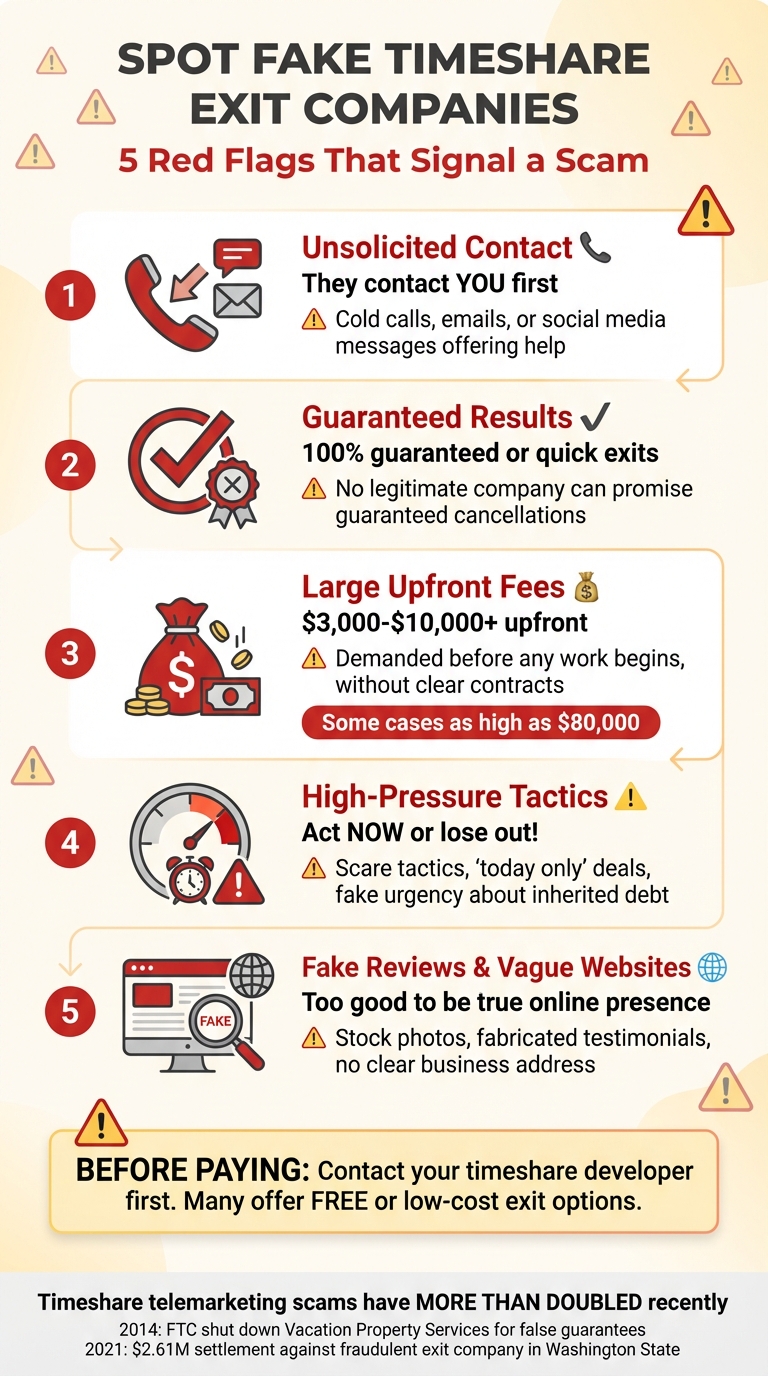
5 Red Flags of Fake Timeshare Exit Companies
Red Flags That Signal a Fake Timeshare Exit Company
Spotting the warning signs of a fraudulent timeshare exit company can save you from losing money and enduring unnecessary stress. Scammers often follow predictable patterns, and understanding these red flags is a crucial step before verifying a company’s legitimacy.
Unsolicited Calls, Emails, and Social Media Messages
Legitimate timeshare exit services don’t cold-call or send unsolicited messages. If you receive an unexpected phone call, email, or social media message offering help to exit your timeshare, proceed with caution. Scammers often gather owner information from public records or deed searches, then craft messages that appear personalized.
These fraudsters may claim to represent organizations like the American Resort Development Association (ARDA), your timeshare developer, or even government entities. Some go as far as impersonating foreign officials. A common ploy involves claiming they have a buyer ready to purchase your timeshare at an inflated price – but only if you act immediately.
If it sounds too good to be true, it probably is.
Promises of Guaranteed Results and Fast Exits
No legitimate company can promise a guaranteed or quick timeshare exit. Timeshare contracts are complex legal agreements, requiring negotiations, legal reviews, and often lengthy processes. Anyone claiming immediate or 100% cancellation is misleading you.
For instance, in May 2014, the FTC shut down Vacation Property Services for falsely promising guaranteed results. They claimed to represent corporate buyers and guaranteed financial returns, charging upfront "registration" fees between $500 and $2,000. The buyers didn’t exist, leaving owners stuck with debt and no resolution.
Large Upfront Fees Without Clear Contracts
Another major red flag is being asked for large upfront payments before any work begins. Fraudulent companies often charge between $3,000 and $10,000 upfront, with some cases reported as high as $80,000. These fees are often labeled as "registration costs", "legal retainers", or "tax stamps", but the outcome is almost always the same: you pay, and nothing happens.
In 2021, the Washington State Attorney General’s Office secured a $2.61 million settlement against a timeshare exit company that collected hefty fees – ranging from $3,000 to tens of thousands of dollars – without delivering results. Victims waited years for promised services that never materialized. Worse, scammers often fail to provide written contracts, or the contracts they do provide don’t align with their verbal promises. Once the funds are transferred, they often disappear overseas, making recovery nearly impossible.
High-Pressure Sales Tactics and Scare Tactics
Fraudulent companies rely heavily on creating artificial urgency to push you into making impulsive decisions. They might invite you to a seminar at a hotel or restaurant, luring you with promises of a "free meal." Once there, you’re subjected to hours-long presentations filled with high-pressure sales tactics like "today only" deals.
Some scammers even use fear, falsely claiming that your children or grandchildren will inherit your timeshare debt unless you act immediately. During the COVID-19 pandemic, these tactics became even more aggressive, targeting people facing financial hardship.
Fake Reviews and Questionable Online Presence
Scammers often fabricate an online presence to appear credible. They create glowing testimonials, build generic websites using stock photos, and post fake reviews on various platforms. Before trusting any company, search their name alongside terms like "scam" or "complaint" to uncover others’ experiences.
Check independent review platforms like the Better Business Bureau instead of relying solely on the company’s website. Look for patterns in complaints – such as reports of upfront fees with no follow-through – or signs the company frequently changes names. Verify credentials like licensed attorneys on staff or membership in recognized organizations. A vague website with no clear business address or details about their services is another red flag to watch for.
How to Verify a Timeshare Exit Company’s Legitimacy
After spotting any potential red flags, it’s time to confirm whether the company is legitimate. Start by checking for proper industry credentials and affiliations.
Check for ARDA Membership and Industry Credentials

Look up the company in ARDA’s corporate directory. Membership in ARDA (American Resort Development Association) indicates compliance with industry standards. If a company isn’t listed, that’s a warning sign.
Another helpful tool is ResponsibleExit.com, managed by ARDA’s Coalition for Responsible Exit. This platform features vetted third-party resale and exit providers. As Jason Gamel, President and CEO of ARDA, explains:
"ResponsibleExit.com is a safe and trusted resource that will help with any questions you may have."
For resale companies, ensure they hold a real estate broker’s license in their home state. You can verify this via the Association of Real Estate License Law Officials (ARELLO) website or through your state’s real estate licensing agency. Legitimate brokers usually work on commission rather than charging hefty upfront fees.
Next, take a closer look at any legal professionals involved.
Confirm Attorney Licensing and Experience
If the company claims to offer legal services or collaborates with attorneys, check your state bar’s website to confirm the attorney’s license. Make sure they specialize in timeshare law. This step helps you avoid falling victim to unauthorized or fraudulent legal claims.
Contact Your Timeshare Developer Directly
Before committing to any third-party service, reach out to your timeshare developer. Many developers provide internal exit programs, such as deed-back options, hardship releases, or other solutions. These programs are often free or come with minimal fees, making them safer and more affordable alternatives to external services.
Additionally, ask your developer if the company contacting you is recognized by them. Verifying this can back up your earlier findings from red flag checks. Some developers even have fraud hotlines to assist owners. For example, Wyndham offers a "Scambusters" hotline at 1-855-596-9233, where you can report suspicious activity and confirm a company’s legitimacy. If your developer doesn’t recognize the company, treat it as a major warning sign.
sbb-itb-d69ac80
What Legitimate Timeshare Exit Services Provide
Once you’ve confirmed a company’s legitimacy, it’s crucial to understand the services they offer. Trusted timeshare exit firms prioritize transparency, realistic solutions, and legal integrity, ensuring your protection throughout the process.
Clear Contracts and Fee Structures
Reputable companies provide written agreements that detail the steps they’ll take to address your timeshare obligations. These contracts should include a transparent fee structure, listing all costs upfront – including any additional charges that may arise – so there are no surprises. Typically, fees range between $2,000 and $5,000, depending on the complexity of your case. Always ask for a sample contract and fee schedule before committing.
The agreement should also outline the legal or contractual approach they plan to use and include contingency plans if the initial strategy doesn’t succeed. Setting realistic expectations is key, so the contract should clearly explain the process and avoid overly optimistic promises.
Honest Expectations and Timeframes
Legitimate firms never make unrealistic guarantees, like promising to resolve your case in 30 days. Instead, they provide reasonable timelines, often spanning several months, tailored to the specifics of your contract. They take an individualized approach, analyzing your situation rather than applying a generic solution.
Additionally, reliable services explain what happens if their efforts don’t result in success and maintain open communication throughout the process. This honesty helps build trust and ensures you’re informed every step of the way.
Legal Support from Timeshare Attorneys
Specialized legal support is a hallmark of legitimate timeshare exit services. Working with experienced timeshare attorneys protects you from bad advice that could jeopardize your financial stability. For example, some fraudulent companies may suggest you stop paying maintenance fees, which can lead to severe financial repercussions.
Licensed attorneys, however, provide accurate guidance based on your contract and shield you from scare tactics or false claims. Firms like Aaronson Law Firm focus solely on timeshare contract cancellations, offering services such as free consultations, legal demand letters, credit protection, and litigation support when necessary. Their expertise ensures that the legal complexities are handled professionally while keeping you informed throughout the process.
These practices distinguish trustworthy services, safeguarding your rights and making the exit process as smooth as possible.
Conclusion
Protecting yourself from fraudulent timeshare exit companies requires careful research and awareness. Reports show that telemarketing scams targeting timeshare owners have more than doubled recently, making it crucial to stay alert. Enforcement actions have shed light on just how widespread these schemes are.
Before turning to any third-party service, reach out to your timeshare developer first. Many resorts now offer free or low-cost exit programs, which shady companies often charge thousands of dollars to "facilitate." Always verify credentials through state licensing boards, review complaints on the Better Business Bureau, and search online for any warning signs linked to the company. This step can save you from falling into a scam.
If you need legal assistance, consider working with licensed attorneys who specialize in timeshare contracts. For example, Aaronson Law Firm focuses solely on timeshare cancellations, offering free consultations, legal demand letters, credit protection, and litigation support when necessary. With their experience, you can trust that the guidance you receive is legitimate and won’t put your credit or property at risk.
Be cautious about paying large upfront fees, especially without a clear, written agreement. Avoid companies that pressure you into quick decisions or make unrealistic guarantees. By following these precautions and consulting a trusted attorney, you can navigate the exit process safely and steer clear of scams.
FAQs
How can I tell if a timeshare exit company is trustworthy?
To figure out if a timeshare exit company is reliable, start by digging into their reputation. Look at online reviews, testimonials, and check for any complaints lodged with the Better Business Bureau (BBB). Keep an eye out for red flags like hefty upfront fees, pushy sales tactics, or promises that sound too perfect to be true.
Verify that the company is licensed or accredited by well-known organizations, and ensure they specialize in handling timeshare-related cases. Steer clear of companies that insist on payment before showing results. For added confidence, consider consulting a trusted legal expert, such as Aaronson Law Firm, to help you navigate your timeshare exit options.
How should I handle unsolicited calls or messages from a timeshare exit company?
If a timeshare exit company reaches out to you unexpectedly, it’s important to tread carefully. Unsolicited calls or messages can often signal potential scams. Be cautious about sharing any personal or financial details, and never agree to pay upfront fees without confirming the company’s credibility.
Do your homework before proceeding. Look into the company’s background, verify their credentials, and read reviews from other clients. Make sure they specifically focus on timeshare exit services. Consulting a trusted legal professional can also help you navigate the process with confidence.
Why should I contact my timeshare developer before using a third-party exit service?
Reaching out to your timeshare developer should always be your first step. Legitimate developers often offer straightforward solutions to address your contract concerns, without surprise fees or interruptions to your payment schedule.
Fraudulent exit companies, on the other hand, might push you to stop paying maintenance fees – a move that can result in serious financial and legal consequences.
By contacting your developer directly, you can verify any claims made by third-party services and steer clear of scams that overpromise and underdeliver. This approach safeguards your finances and helps you make well-informed choices about your timeshare.
Related Blog Posts
- 7 Warning Signs of Timeshare Contract Fraud to Watch For
- How To Spot Deceptive Timeshare Offers
- How Timeshare Resale Scams Operate
- Timeshare Scam Trends in 2025