
If you own a timeshare in Texas, Chapter 221 of the Texas Property Code, also known as the Texas Timeshare Act, is crucial to understand. It outlines your rights, including a non-waivable six-day cancellation period for new purchases, protections against deceptive practices, and requirements for financial transparency from developers. Here’s what you need to know:
- Cancellation Rights: You can cancel a timeshare contract within six days of signing or receiving the required disclosures. This right cannot be waived, and all payments must be refunded within 30 days.
- Consumer Protections: Developers cannot mislead buyers with false claims about amenities, inflated resale values, or unfair transfer schemes.
- Financial Obligations: After the cancellation window, owners are responsible for maintenance fees, taxes, and assessments unless they formally terminate the contract through legal action or agreement.
For complex cases beyond the cancellation period, legal support, like that offered by Aaronson Law Firm, can help resolve disputes, terminate contracts, or address deceptive practices. While the law provides safeguards, enforcing them often requires professional assistance.
1. Texas Property Code Requirements
Cancellation Rights
Under Texas Property Code Section 221.041, you have the right to cancel your timeshare purchase up until the sixth day after signing the contract or receiving the required disclosure statement – whichever happens later. This cancellation period is non-negotiable, and any attempt to waive this right makes the contract voidable.
To cancel, you need to send a cancellation notice using a verifiable method, such as hand-delivery, tracked prepaid mail, or an overnight carrier. Using a tracked delivery method ensures proof of receipt. Once the developer receives your notice, they are required to refund all payments within 30 days or within five days of receiving verified funds from you, whichever is later.
In addition to cancellation rights, Texas law offers several other protections for buyers.
Consumer Protections
Texas Property Code Section 221.071 addresses consumer protection by prohibiting certain unethical practices under the Texas Deceptive Trade Practices-Consumer Protection Act. Developers are not allowed to make false claims about property amenities, promise immediate value increases without evidence, or misrepresent promotional prizes. They also cannot engage in schemes that transfer timeshare interests to buyers who are unable or unwilling to pay assessments. This provision helps protect buyers from deceptive practices and predatory transfer companies.
The law also requires developers to maintain a one-to-one purchaser-to-accommodation ratio, ensuring that each unit is only counted a maximum of 365 times per year (366 in leap years). Additionally, developers must hold purchase payments in escrow or trust accounts and provide annual statements that detail all fees and expenses, promoting financial transparency for owners.
Financial Obligations
Texas law also outlines the financial responsibilities tied to timeshare ownership. After purchasing a timeshare, you are responsible for costs like annual maintenance fees, special assessments, utilities, and property taxes for as long as you own the property. If you cancel within the allowed timeframe, all future obligations are voided, and you are entitled to a full refund. However, failure to pay after this period can lead to legal consequences, including foreclosure.
For deeded timeshares, Texas allows both judicial and nonjudicial foreclosure processes. Right-to-use timeshares, on the other hand, may face repossession through a different legal route.
sbb-itb-d69ac80
2. Aaronson Law Firm Services

Aaronson Law Firm provides specialized legal support to help you assert and protect your rights under Texas Property Code Chapter 221.
Cancellation Rights
The firm helps timeshare owners exercise their six-day cancellation rights, which cannot be waived. They verify disclosure dates and challenge any clauses that might undermine your right to cancel. If you’ve missed the initial cancellation window, they can assist in securing formal termination through court orders or agreements with developers, ensuring you’re released from ongoing obligations.
Consumer Protections
Aaronson Law Firm takes on deceptive practices by developers, such as misleading claims about property amenities, promises of increased value without evidence, or unfair transfer schemes. They also address situations where developers fail to provide required contract copies at the time of signing, holding them accountable for these violations.
Financial Obligations
The firm works to alleviate financial burdens tied to timeshare ownership. They ensure managing entities meet their legal obligations, like providing annual statements and properly handling escrowed payments. Through legal action and demand letters, they aim to free clients from maintenance fees, special assessments, and other financial responsibilities.
With these services, Aaronson Law Firm helps Texas timeshare owners navigate the legal and financial challenges associated with their contracts.
Pros and Cons
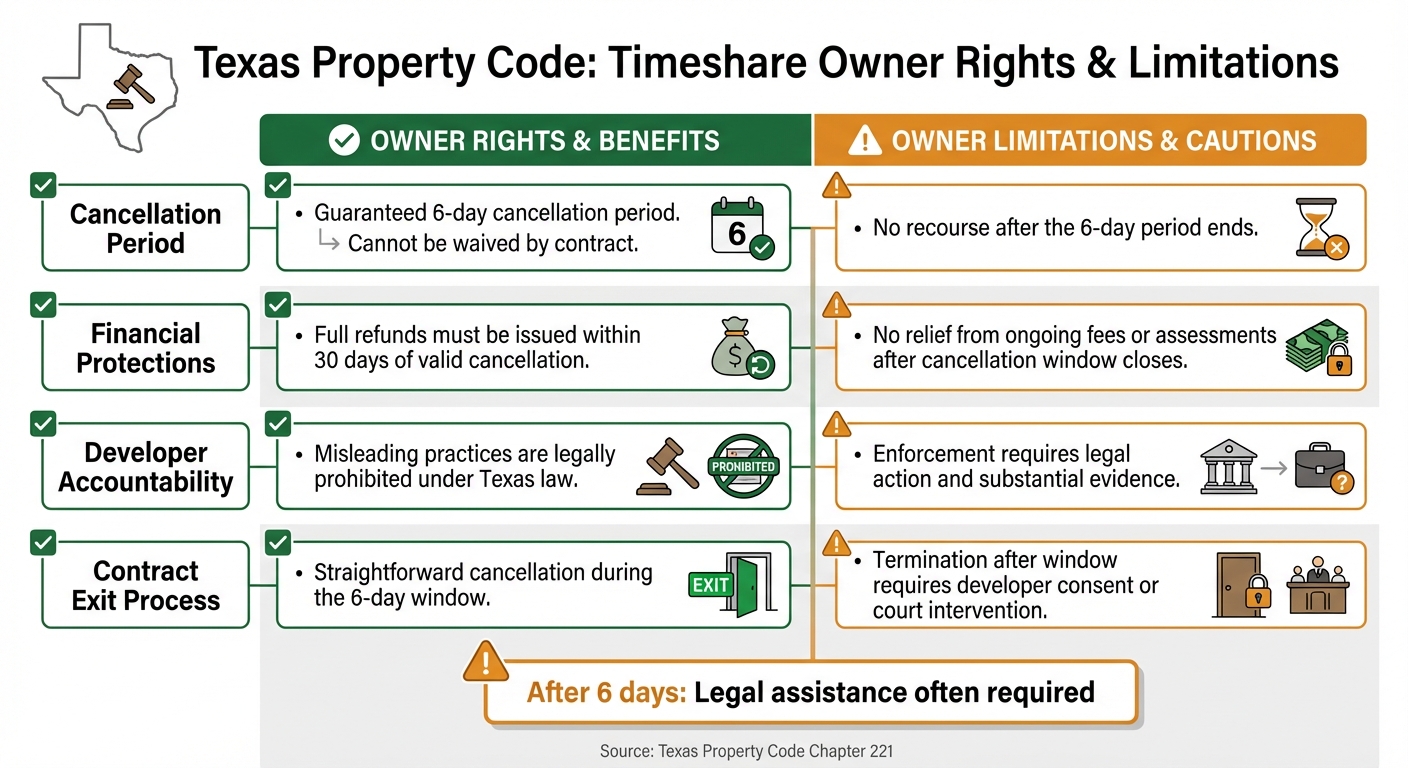
Texas Timeshare Rights: Benefits vs Limitations Under Property Code
The Texas Property Code provides robust protections for timeshare buyers, but these safeguards come with notable limitations. One of the key benefits is the six-day cancellation period under Section 221.041, which allows you to cancel your purchase without needing to justify your decision. This right is non-negotiable – any contract attempting to waive it is legally unenforceable. During this brief window, you can send a verifiable cancellation notice to legally exit the agreement.
However, after the six-day period ends, your options become far more limited. The Code does not provide a clear path to release you from long-term obligations once this period expires. While it prohibits deceptive practices, such as misrepresenting amenities or promising unrealistic value increases, proving these violations often requires legal action. The burden of proof lies with you to demonstrate that the developer violated the Texas Deceptive Trade Practices-Consumer Protection Act. Let’s break down the benefits and limitations of these legal protections:
| Feature | Texas Property Code Benefits | Code Limitations |
|---|---|---|
| Cancellation Period | Guaranteed 6-day cancellation; cannot be waived | No recourse after the period ends |
| Financial Protections | Refunds must be issued within 30 days of valid cancellation | No relief from ongoing fees or assessments after the cancellation window closes |
| Developer Accountability | Misleading practices are legally prohibited | Enforcement requires legal action and substantial evidence |
| Contract Exit Process | Straightforward cancellation during the six-day window | Termination after the window requires developer consent or court intervention |
While the statutory protections offer some peace of mind, the real challenges often arise after the cancellation period ends. At this stage, securing expert legal assistance becomes crucial. The Texas Property Code gives you the ability to cancel within six days on your own, but for contracts that extend years beyond this window, firms like Aaronson Law Firm can step in to help. They specialize in judicial termination, which can end long-term obligations even years after the purchase. Their services include litigation, settlement negotiations, and court-ordered contract releases, addressing issues the Code alone cannot resolve. This includes tackling foreclosure defense, exposing material errors, and proving deceptive practices with the necessary evidence.
Ultimately, while the Property Code provides a solid foundation of consumer protections, enforcing these rights after the cancellation window often requires legal action. Even with these safeguards, ongoing financial obligations – like maintenance fees and special assessments – remain enforceable unless you secure a formal termination through a developer agreement or court order. Legal counsel plays a critical role in navigating the complexities of the judicial system to help you end these obligations and protect your financial future.
Conclusion
The Texas Property Code offers clear legal protections for timeshare owners, but knowing how to use these rights is key to enforcing them. One of the most straightforward safeguards is the six-day cancellation period outlined in Section 221.041, which allows you to cancel a timeshare agreement without complications. After this window closes, canceling a timeshare becomes much more challenging, often requiring proof of deceptive practices or breaches of contract.
"A purchaser may not waive the right of cancellation under this section. A contract containing a waiver is voidable by the purchaser." – Texas Property Code § 221.041
It’s important to note that any contract clause attempting to waive your cancellation rights is legally unenforceable. Additionally, if you were not provided with the required disclosures, the cancellation period might not have even begun. These legal protections are designed to support timeshare owners, especially when self-representation is not enough to resolve issues.
For those who need help navigating the complexities beyond the cancellation period, Aaronson Law Firm offers specialized legal services. They can help identify invalid waivers, address deceptive practices under Section 221.071, and pursue court-ordered terminations when violations of the Code occur. Their expertise includes reviewing disclosure documents for missing information, documenting false advertisements, and ensuring compliance with the good faith standards set forth in Subchapter I of Chapter 221.
While Texas law provides a strong legal foundation for timeshare owners, enforcing these protections often requires professional guidance. By understanding the rights outlined in the Texas Property Code – from immediate cancellation options to more complex legal remedies – you can protect your financial interests and take informed steps to resolve unwanted timeshare commitments.
FAQs
When does the 6-day cancellation clock start?
The 6-day cancellation period starts based on whichever of these two events happens later: the day you sign and receive the contract, or the day you get the required disclosure statement. Double-check both dates to pinpoint your exact cancellation deadline.
How do I prove I canceled my timeshare on time?
To confirm you canceled your timeshare within the required timeframe, it’s crucial to keep evidence of your written cancellation notice and its delivery. According to Texas Property Code 221.041, you must use approved methods like hand delivery, U.S. mail, or a trackable courier service. Be sure to hold onto proof of delivery – this could be a certified mail receipt, tracking confirmation, or a delivery receipt. These documents ensure you can verify that your cancellation was submitted within the six-day period and complied with legal standards.
What can I do if I missed the 6-day cancellation window?
If the 6-day cancellation window has passed, canceling a timeshare under Texas law becomes much more challenging. That said, reaching out to a legal professional could open up alternative paths. They might help identify any issues within the contract or assist in negotiating directly with the timeshare company. Seeking legal advice can shed light on your rights and possible next steps.
Related Blog Posts
- Timeshare Laws: Federal vs. State Protections
- Texas Property Code 221.041: Rescission Rights
- State Laws on Timeshare Resale Restrictions
- Texas Timeshare Advertising: Required Disclosures