
Cross-border timeshare mediation offers an alternative to costly and time-consuming litigation for resolving international disputes. Here’s what you need to know:
- Why Mediation Works: It’s cheaper, faster, and more private than litigation, especially for disputes involving properties in regions like Mexico, the Caribbean, or Europe.
- Choosing the Right Mediator: Look for neutral, experienced mediators with cross-border expertise and fluency in relevant languages.
- Preparing for Mediation: Organize contracts, payment records, communications, and a detailed timeline of events. Translate and authenticate foreign documents for clarity.
- Legal Support: Hiring a lawyer ensures enforceable agreements and protection against unfair terms. Avoid unlicensed "exit companies" that lack legal authority.
Key Tip: Act early to avoid mounting fees and legal complications. Proper preparation and expert guidance are essential for a successful resolution.
Cross-Border Timeshare Mediation Basics
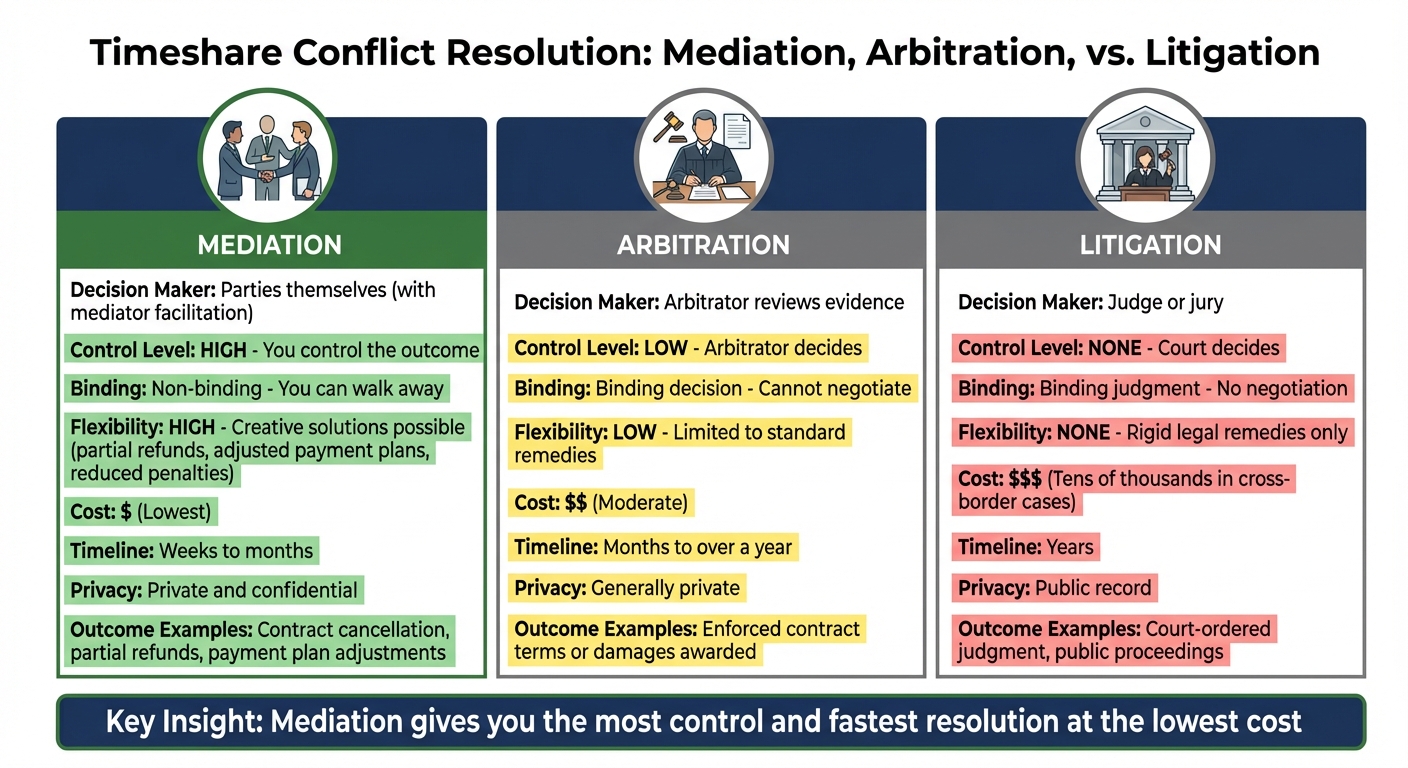
Mediation vs Arbitration vs Litigation for Timeshare Disputes
What Mediation Means for Timeshare Disputes
Mediation is a voluntary process where a neutral third party helps you and the timeshare company find common ground. Unlike arbitration or litigation, mediation gives you more control over the outcome. The mediator’s role is to facilitate conversations, clear up misunderstandings, and guide both sides toward solutions that work for everyone. However, the mediator doesn’t impose decisions.
This flexibility sets mediation apart from arbitration, where an arbitrator reviews evidence and delivers a binding decision that you can’t negotiate. Litigation is even more rigid, with a judge or jury making the final call in a formal court setting. Both processes strip away your ability to influence the outcome and can leave you stuck with results you didn’t want.
In mediation, you’re free to walk away if the terms don’t meet your needs. This flexibility opens the door to creative solutions that courts or arbitrators rarely offer – like partial refunds, adjusted payment plans, or even contract cancellations with reduced penalties.
Why Mediation Works for Cross-Border Disputes
Mediation is a cost-effective way to resolve disputes involving timeshares in regions like Mexico, the Caribbean, or Europe. Cross-border litigation can rack up tens of thousands of dollars in legal fees, not to mention the hassle of navigating foreign courts. Mediation, on the other hand, is significantly cheaper and much faster, often resolving issues in weeks or months rather than years.
Another advantage is privacy. Mediation keeps your financial details and the resort’s reputation out of the public eye. Plus, many timeshare contracts require mediation before you can even consider suing, often specifying providers like the American Arbitration Association (AAA) or JAMS.
For international disputes, mediation can often be done online, saving you the time and expense of traveling. This is especially convenient if you’re in the U.S. and the resort is located thousands of miles away. Mediators also help bridge cultural and language differences. For example, a mediator can help a U.S. timeshare owner, who may prefer direct and results-driven communication, work effectively with a Caribbean resort that values relationship-building and indirect negotiation styles.
These key points lay the groundwork for choosing the right mediator in the next section.
How to Select a Qualified Neutral Mediator
Checking Mediator Credentials and Experience
When choosing a mediator, start by verifying that they hold internationally recognized credentials, such as those from CEDR or DIAC, which demonstrate their expertise. Beyond certifications, it’s crucial to ensure they have hands-on experience in areas like timeshare law, contract disputes, and consumer protection. You can ask for documented training records or references from past cases to confirm their qualifications.
If your dispute involves multiple countries, make sure the mediator has experience in cross-border cases. They should be well-versed in how regulations differ across regions – for instance, understanding European Union timeshare rules compared to Mexican cooling-off laws or Caribbean legal frameworks. Ask about their history with international disputes and their knowledge of cross-border enforcement mechanisms. Resources like the American Arbitration Association’s "Find a Mediator" tool or organizations like JAMS ADR can help you locate qualified professionals.
Another key factor is language fluency. The mediator must speak all parties’ languages or arrange for competent interpreters. Once you’ve confirmed their credentials and experience, ensure they are committed to maintaining strict neutrality throughout the process.
Confirming Mediator Neutrality
After verifying qualifications, the next step is to ensure the mediator’s impartiality. Neutrality is critical in timeshare mediation, as any bias can undermine the process. Start by conducting a thorough conflict-of-interest check. Ask the mediator directly about any prior relationships with timeshare companies, resort operators, or legal representatives involved in similar cases. They should also disclose any financial ties to the timeshare industry or connections to parties in your dispute.
Be cautious about mediators sourced from developer-approved pools, as their independence may be compromised despite their credentials. A truly neutral mediator should provide written confirmation of their impartiality and be willing to step aside if there’s even a hint of conflict.
Pay close attention to their behavior during initial discussions. If a mediator appears overly sympathetic to one side or exhibits a financial interest in the outcome, proceed with caution. Their role is to guide both parties toward a fair resolution – not to favor the timeshare company or pressure you into an unfavorable agreement.
Warning Signs of Unqualified Mediators
Certain red flags should prompt you to look elsewhere. Avoid mediators who lack verifiable credentials or cannot provide references from previous cases. Steer clear of those who exhibit bias, lack knowledge of timeshare law, or fail to address jurisdictional concerns. Mediators who push for quick settlements or seem uninformed about relevant legal frameworks are also problematic.
Be especially wary of unlicensed entities like "timeshare exit companies" or "financial groups". Unlike licensed attorneys or legitimate law firms, these organizations cannot take legal action against timeshare developers, leaving you without proper protection or leverage. If the process feels more like a sales pitch than a professional consultation, it’s time to walk away. Always choose licensed professionals who are legally obligated to prioritize your best interests.
Handling Jurisdictional and Legal Issues
How Jurisdictional Differences Affect Mediation
Cross-border timeshare disputes can quickly become a tangled web, especially when U.S. owners are dealing with resorts in places like Mexico, the EU, or the Caribbean. Most timeshare contracts specify which country’s courts will handle disputes and which laws will apply, making mediation more complex – and often more expensive. Legal systems vary widely in how they approach mediation. For instance, in some civil law countries, pre-litigation mediation is mandatory, often through court-linked or administrative programs, before a lawsuit can even be filed.
Take Mexico as an example: the Federal Consumer Protection Agency (PROFECO) facilitates conciliation for complaints about tourist services. Owners who come prepared with well-organized files, including courier receipts and bilingual notices, tend to have better outcomes. In contrast, mediation in the U.S. is generally voluntary or court-ordered but managed privately, with a stronger focus on confidentiality and party autonomy.
Before diving into mediation, it’s crucial to consult with an attorney who has experience in cross-border timeshare disputes. They can help you assess whether the terms in your contract are enforceable or if local consumer-protection laws might override unfair clauses. This knowledge can give you leverage in negotiating the location and process of mediation. Being aware of these jurisdictional nuances is key to developing a successful strategy and avoiding unexpected costs. These complexities also highlight the importance of accurate document translation and authentication.
Translating and Authenticating Foreign Documents
If your timeshare documents – like contracts, correspondence, or resort rules – are in a foreign language, getting professional translations is a must. Focus on translating critical documents, such as purchase agreements, payment schedules, cancellation letters, and dispute notices. It’s also a good idea to prepare a bilingual package that pairs the original documents with their English translations in a side-by-side format. This approach minimizes disputes over interpretation during mediation.
Outgoing communications, like cancellation requests or regulatory complaints, should also be translated into the local language of the resort. This shows good faith and ensures that mediators and opposing parties fully understand your position.
To build credibility, authenticate your documents with certified copies from notaries, government registries, or the resort itself. If needed, add apostilles or consular certifications under the Hague Convention framework to confirm the authenticity of signatures and seals. For translated documents, include a translator’s certificate or affidavit attesting to the accuracy and completeness of the translation. These steps are essential if you need to enforce a mediated agreement in court or escalate the issue to regulatory agencies. Once your documents are properly translated and authenticated, the focus shifts to drafting enforceable settlement terms.
Enforcing Mediation Agreements Across Borders
Unlike arbitration awards, which benefit from formal enforcement mechanisms like the New York Convention, mediation settlements are treated as contracts under domestic law. To ensure enforceability across different jurisdictions, your settlement agreement should include clear and detailed terms. Specify key points like the exact date you’re released from obligations, how overdue balances will be handled, refund or credit terms, and instructions for updating credit bureaus or tourist registries.
Make sure the agreement clearly states the governing law and the chosen enforcement forum. Writing the agreement in plain, straightforward language is also critical. If needed, create a version in both languages and clarify which one will take precedence in case of discrepancies. In some cases, you can request that the settlement be formalized as a court-approved order, a notarial act, or a regulatory conciliation record – such as through PROFECO in Mexico – to simplify enforcement across jurisdictions.
Specialized firms, like Aaronson Law Firm, are well-versed in both U.S. consumer laws and international resort frameworks. They can help ensure your settlement terms are enforceable both domestically and abroad. The agreement should clearly outline performance steps, such as cancellation dates, payment schedules, and credit corrections, as well as specify what will happen if either party breaches the terms. Including these details not only protects you from future disputes but also increases the likelihood that both sides will honor the agreement. The mediator’s role in crafting a fair and balanced outcome is key to achieving a resolution that stands the test of time.
sbb-itb-d69ac80
How to Prepare for Mediation
Walking into cross-border timeshare mediation without preparation can seriously weaken your case. The mediator needs a clear understanding of your situation, and the resort’s representatives will be ready to exploit any gaps in your argument. To stay ahead, create a well-organized file that lays out your story and backs up every claim with solid evidence. Here’s how to gather the necessary documents, build a timeline, and keep track of communications.
Collecting Documents and Evidence
Start by gathering every document tied to your timeshare. This includes contracts, financing records, payment receipts, and maintenance fee invoices – both in English and any other relevant language. Be sure to include the original purchase agreement, any addenda, upgrades, or point-conversion agreements, along with financing documents, loan statements, and payment schedules. Maintenance fee invoices, assessment notices, and proof of payments are also essential.
Next, compile payment records like credit card statements, bank statements, and wire transfer receipts. These will help demonstrate your total investment in U.S. dollars and illustrate the financial strain you’ve faced. If your case involves claims of misrepresentation, gather marketing materials such as brochures, promotional emails, screenshots of online ads, and any letters promising benefits like rental income or easy resale that didn’t pan out.
"Our timeshare attorneys will work together with you to put together a file of information relevant to your situation. Names, account numbers, sales information and all paperwork that was provided to you at the time of sale are among the items that we will need." – Aaronson Law Group
Don’t forget to include all written communications with the developer, resort, collection agencies, or third-party exit companies. This could be emails, letters, text messages, or chat logs from resort portals. If you’ve filed complaints with regulatory bodies like PROFECO in Mexico or a U.S. state attorney general, include copies of those filings and any responses you’ve received. For cross-border cases, attach certified translations alongside the originals. Organize everything into labeled folders by topic, such as "Contracts", "Payments", "Complaints", "Collections", and "Translations."
Building a Timeline of Events
A detailed timeline can be a game-changer in mediation. Document key events, starting with the initial sales pitch. Note the date (MM/DD/YYYY), location, and the names of any sales representatives involved. If you faced high-pressure tactics or false promises, include those details too. Record the date and location of contract signing, along with any additional purchases or upgrades made later.
List every payment you’ve made, including down payments, loan disbursements, and maintenance fees. Highlight the date you first encountered issues, whether it was trouble booking a stay, hidden fees, or unfulfilled promises. Include dates for any formal complaints or cancellation attempts, cross-referencing each entry with supporting evidence.
For disputes involving multiple countries, specify where each event occurred. For example, "01/15/2023 – Contract signed in Cancún, Mexico; buyer resides in Florida, USA." Be sure to note the currency used for each payment – whether it was Mexican pesos, euros, or U.S. dollars – and provide an approximate USD equivalent using a conservative exchange rate. This helps the mediator understand your financial exposure in a familiar context. Conclude your timeline with the most recent communication, such as a collection notice or foreclosure warning. Each entry should include the date, location, a brief description, and the corresponding exhibit number.
Keeping Track of Communications
Clear records of all communications are vital for building a strong case. Use email whenever possible, and save all correspondence as PDFs. Send emails from an account you control, using clear subject lines like "Formal Cancellation Request – Contract #12345." Organize all sent emails and replies into a dedicated folder, and periodically back them up as PDFs.
For physical mail, use tracked services like USPS Certified Mail, FedEx, or DHL. Keep receipts and tracking information as part of your evidence. If you communicate through resort portals or apps, take screenshots of your messages, ensuring timestamps and URLs are visible. After phone calls or in-person meetings, write dated notes summarizing the conversation, including who you spoke with and what was discussed. Follow up with an email to confirm the details (e.g., "As discussed today, you mentioned that…"). This can serve as evidence if the resort doesn’t dispute your summary.
In cross-border cases, keep proof of international deliveries, such as courier tracking receipts, consulate submission confirmations, or PROFECO filing acknowledgments. When sending cancellation or demand letters, include your full legal name, U.S. mailing address, phone number, email, contract number, date of purchase, and resort details. Be specific about what you’re asking for, whether it’s a contract cancellation, refund, or correction to your credit report. Back up all records in two places – a local drive and a secure cloud folder – and share copies with your legal representative. Firms like Aaronson Law Firm, which specialize in timeshare disputes, can assist with drafting demand letters and organizing your documents to ensure you’re fully prepared for mediation.
When to Hire Legal Counsel
Handling cross-border timeshare disputes can quickly become overwhelming, especially when you’re dealing with multiple jurisdictions. For example, if you live in Florida but purchased a timeshare in Cancún, you’re navigating two legal systems, each with its own rules for consumer protection, contract enforcement, and procedures. Factor in an unresponsive developer, and representing yourself becomes a risky gamble.
Situations That Call for Legal Expertise
There are certain warning signs that signal it’s time to bring in a lawyer. If your timeshare company is ignoring your cancellation requests or dragging out the process, causing costs to pile up, legal intervention may be necessary. Contracts that include mandatory mediation or arbitration clauses often require precise legal language and procedural steps – missing these can mean forfeiting your rights. And if developers escalate to threats of foreclosure, credit damage, or legal action, an attorney is essential to defend your interests or even countersue.
"To challenge the validity of an ostensibly binding contract is decidedly a job that can only be handled by licensed professionals." – Aaronson Law Group
How Lawyers Strengthen Mediation Outcomes
Legal expertise can significantly alter the balance of power during mediation. Without representation, timeshare companies often assume owners will accept unfavorable terms or overlook critical details in settlement agreements. The presence of a lawyer signals to developers that they’re dealing with someone who knows how to identify unfair clauses, such as one-sided releases or overly restrictive confidentiality terms.
Attorneys skilled in cross-border disputes bring a deep understanding of both legal systems and local nuances, allowing them to craft stronger cases. They prepare detailed documentation, anticipate potential legal hurdles, and ensure settlements are enforceable in all relevant jurisdictions – whether that’s a U.S. court, a foreign tribunal, or both. This preparation can lead to better outcomes, such as full contract cancellations, debt forgiveness, and even corrections to your credit report.
"Unlike timeshare exit companies, we are actual attorneys. That means that we have a fiduciary and legal obligation to put our client’s interests first." – Aaronson Law Group
Aaronson Law Firm offers free consultations to assess your case and develop a tailored strategy. Their approach may include mediation, filing regulatory complaints (such as with PROFECO in Mexico), or disputing charges with your credit card company. Their attorneys handle everything from drafting legal demand letters to protecting your credit under 15 USC 1681, and they’re prepared to litigate if mediation efforts fail. With a focus exclusively on timeshare disputes, they know the tactics developers use and how to counter them effectively.
Avoiding Timeshare Exit Scams
While navigating legal disputes, it’s equally important to steer clear of fraudulent exit schemes. Many unlicensed entities and unqualified mediators pose serious risks. Licensed attorneys are held to strict ethical standards, carry malpractice insurance, and face disciplinary action if they mishandle your case. They provide written agreements that clearly outline their services, fees, and jurisdictional scope, and they have the authority to represent you in court or arbitration.
"Emphatically, without the ability to sue or countersue the timeshare developer through a timeshare lawyer you have NO legal protection or leverage." – Aaronson Law Group
To protect yourself, ensure that anyone you hire is a licensed attorney in at least one relevant jurisdiction. Check their bar membership and disciplinary history online. Be cautious of cold calls, high-pressure sales tactics, or promises of guaranteed results without reviewing your contract. Reputable firms like Aaronson Law Firm offer clear fee structures and free initial consultations, giving you a chance to explore your options before committing. If a company demands large upfront fees – often ranging from $5,000 to $15,000 – without specific details, it’s a red flag.
Having qualified legal representation not only strengthens your mediation efforts but also ensures you avoid costly mistakes and scams, giving you the leverage needed for a fair resolution.
Conclusion
Cross-border timeshare mediation provides a quicker, more private, and cost-effective alternative to litigation. Its success depends on three key factors: careful preparation, choosing an experienced and impartial mediator, and securing knowledgeable legal support.
Before mediation, gather all relevant documents – contracts, payment records, communication logs, and a detailed timeline of events. Opt for mediators with solid cross-border experience who maintain strict neutrality. Be cautious of mediators selected solely by the resort, as impartiality may be compromised. Equally critical is having expert legal counsel by your side.
Legal representation is vital in navigating multi-jurisdiction disputes and arbitration. Attorneys who specialize in cross-border timeshare issues can address choice-of-law complexities, ensure settlements are enforceable across borders, and protect you from unfair contract terms. For instance, Aaronson Law Firm focuses exclusively on timeshare contract cancellations, offering free consultations and comprehensive legal support.
Stay vigilant against fraudulent exit schemes. Avoid companies demanding large upfront fees without reviewing your contract or providing written agreements. Licensed attorneys, unlike unregulated exit firms, carry malpractice insurance, are subject to disciplinary oversight, and can represent you in court or arbitration. Always verify an attorney’s bar membership and disciplinary record before hiring.
Acting early and with the right information can prevent rising maintenance fees, credit damage, and mounting debt. Combining mediation with additional strategies – such as filing regulatory complaints through agencies like PROFECO in Mexico or disputing charges with your credit card provider – can strengthen your position. With thorough preparation, skilled mediation, and expert legal counsel, you can resolve cross-border timeshare disputes efficiently and effectively.
FAQs
What are the advantages of using mediation instead of litigation for resolving cross-border timeshare disputes?
Mediation brings several advantages over litigation, especially when dealing with cross-border timeshare disputes. For starters, it’s usually quicker, more affordable, and offers greater flexibility than taking the matter to court. Through mediation, both parties have the opportunity to work together to find a solution that benefits everyone involved. This collaborative approach not only eases tensions but can also help maintain relationships and minimize stress.
Another key benefit is confidentiality. Mediation keeps the details of your dispute private, unlike court proceedings, which are often part of the public record. Plus, mediation puts more control in your hands, as opposed to litigation where a judge or jury determines the outcome. In cross-border cases, an experienced mediator can help untangle jurisdictional challenges and bridge cultural differences, ensuring the resolution fits the specific needs of your situation.
How do I choose a neutral and qualified mediator for a cross-border timeshare dispute?
Choosing the right mediator is crucial when addressing a cross-border timeshare dispute. You’ll want someone with solid experience in managing international or cross-border cases, as they’ll be familiar with the unique challenges these disputes often present.
Equally important is ensuring the mediator remains completely neutral. They should have no personal or professional connections to either party that might influence their judgment. To feel confident in your choice, take the time to review their credentials, certifications, and past client feedback. These steps can help confirm their expertise and impartiality.
How can I effectively prepare for a cross-border timeshare mediation session?
To get ready for a cross-border timeshare mediation session, the first step is to gather all the necessary documents. This includes your timeshare agreement, payment records, and any correspondence you’ve had with the timeshare company. Keeping these materials well-organized will make it easier to present your case clearly during the session.
It’s also important to understand the legal and jurisdictional issues that might come up during mediation. Cross-border disputes can involve complexities, so selecting a neutral mediator with experience in international cases is key to ensuring the process is fair and effective. Before the session, take time to outline your objectives and the outcomes you hope to achieve. Be ready to share your perspective openly and honestly.
For additional guidance, you might want to consult a seasoned timeshare attorney. They can help you navigate the legal intricacies of your case and develop a strategy tailored to your situation. This support can be especially helpful when tackling the unique challenges that arise in cross-border disputes.
Related Blog Posts
- Mediation vs. Arbitration for Timeshare Disputes
- Landmark Cases vs. Modern Timeshare Disputes
- How Consumer Protection Laws Impact Timeshare Complaints
- Checklist for Avoiding Timeshare Dispute Escalation